
Positive thinking defined
Positive thinking is a habit of meeting difficulty with a constructive inner stance. It is not magical thinking, and it is not pretending a problem is not there.
A practical definition is simple: you acknowledge what is hard, then aim your attention toward what is workable. Many clinical sources describe positive thinking as approaching unpleasantness in a more helpful way, rather than denying it.
In everyday life it sounds like, "This will be tough, but I can take the next step," instead of, "This will be a disaster," or, "Everything is fine, no need to look."
Realistic optimism vs denial
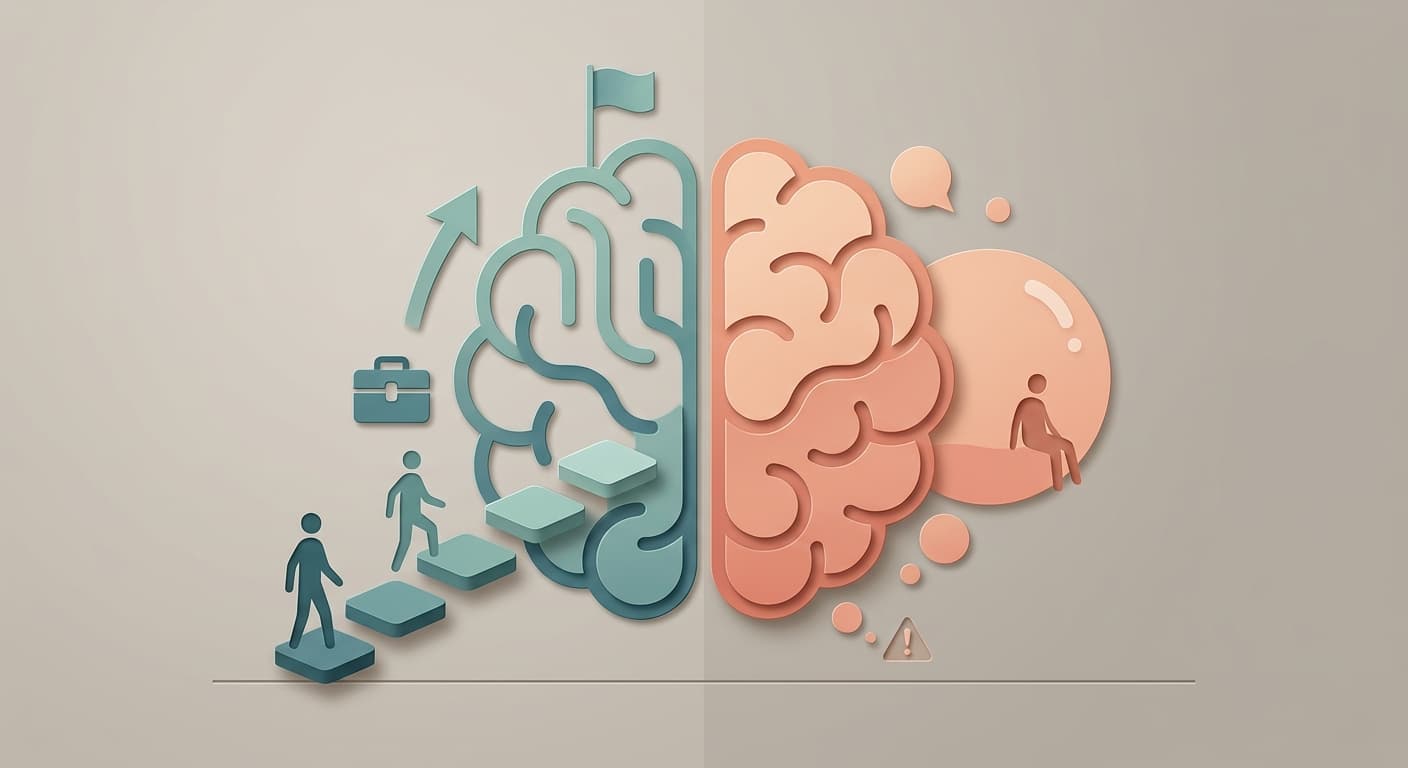
People often mix three different moves that look similar but behave very differently.
Realistic optimism
Realistic optimism is hope with contact to reality. It accepts bad news, assumes you still have some influence, and points toward action, support, or adaptation.
Example: You get critical feedback at work. Realistic optimism sounds like, "This stings, but I can learn what they want and revise."
Denial
Denial refuses information that would force change. It may feel good short term because it reduces discomfort, but it blocks learning and adaptation.
Example: After the same feedback, denial sounds like, "They are wrong, I do not need to adjust anything," while performance keeps slipping.
Suppression posing as positivity
This is what people often mean by toxic positivity. It looks like forcing yourself to be upbeat, policing your feelings, or treating sadness, fear, or anger as failures.
Example: "I should not feel anxious, I just need to think positive," and then spending the day trying not to think about the thing that makes you anxious. Trying not to think about something often keeps the thought active, because the mind must monitor for it.
How it works
Positive thinking changes two basic processes that shape daily experience.
Appraisal and the stress response
Your brain constantly asks, "Is this safe, is this dangerous, can I handle it?" If your inner commentary is catastrophic, your body treats everyday challenges like threats. That produces higher arousal, narrower attention, more reactive choices, and less patience.
When appraisal shifts from "I am doomed" to "This is hard, but manageable," the stress response drops. The goal is not to eliminate stress, but to stop adding extra stress through interpretation.
Positive emotion and cognitive breadth
Mild positive emotion tends to broaden attention and increase the number of options you notice. Optimism and gratitude practices can widen problem-solving space because they make it easier to see alternatives.
In practical terms, this is the difference between thinking there is only one unlikely solution and seeing three or four moves worth testing. Positive thinking works best when paired with small actions, because action provides evidence and stabilizes optimism.
When it helps
Positive thinking is most useful in situations with one of these features.
When you have influence
If you can affect the outcome, even a little, optimism supports persistence. Examples include training for a race, rebuilding trust after conflict, learning a difficult skill, or recovering after a setback where habits matter. In these cases optimism keeps you engaged long enough to benefit from effort.
When you need emotional regulation
Sometimes the next step is blocked by an overwhelmed nervous system, not by lack of intelligence. Positive self-talk can help you slow down, avoid spiraling, and choose a response you will respect later.
Example: Before a difficult conversation, "I can be nervous and still be clear," is often more effective than trying to eliminate anxiety.
When events are ambiguous
Much daily stress comes from ambiguity: unread messages, short replies, or uncertain timelines. The mind fills gaps with the worst available story. Positive thinking helps by keeping the story flexible.
Example: "Maybe they are upset, maybe they are busy. I will ask," is healthier than instantly concluding rejection.
When it backfires
Positive thinking stops helping when it blocks information, emotion, or action.
When it replaces problem-solving
If "staying positive" becomes a reason not to do the uncomfortable task, it turns into avoidance. A simple test is this: after I "think positive," do I take a useful step? If the answer is repeatedly no, the positivity is functioning as a sedative, not as optimism.
When it invalidates grief or pain
Some experiences need honest sadness, not reframing. Loss, illness, and betrayal often require time to mourn. Forcing a bright interpretation too early creates a split between what you say and what your body and behavior show. Positive thinking can help with self-compassion and seeking support, but it should not rush the emotional process.
When it becomes self-criticism
A common failure mode is making positivity a rule you must meet: "I should be grateful," "I should not feel this," or "Others have it worse, so I have no right to struggle." That is not positive thinking. It is another form of negative self-talk dressed up as virtue.
How to practice
Aim for honest, workable thoughts that accept reality and point to next steps. These examples tend to hold up under pressure:
- "This is difficult, and I can do difficult things."
- "I do not know how this turns out, but I can influence the next step."
- "I can feel anxious and still act."
- "What is one small thing that would make this 5 percent better?"
Notice what these statements do not do. They do not deny pain, promise outcomes, or ask you to feel something you do not feel. They focus attention on agency, support, and next actions.
Action is essential. Small experiments and evidence keep optimism grounded. If a positive thought does not lead to a step that tests it, treat the thought as a cue to reassess.
Rule of thumb
Positive thinking helps when it keeps you in contact with reality and increases constructive behavior. It backfires when it reduces contact with reality or becomes a way to silence yourself.
Ask this single question: Is my positive thought helping me tell the truth and take a step, or is it helping me look away? Answer honestly, and you will usually know whether positivity is serving you.