

Not social vs solo
When people ask whether group learning is better than studying alone, the practical question is usually this: what should I do next, given my goal and my limited attention?
The two modes solve different problems. Studying alone builds a stable internal model, your own understanding, recall pathways, and sense of what you do and do not know. Group learning stress-tests that model, it exposes gaps, surfaces alternative approaches, and forces you to explain your thinking so another person can follow.
Treating them as interchangeable often produces the worst outcome. Solo study can become quiet rereading. Group study can become confident conversation that never touches the hard parts. A better move is to match the mode to the job.
Why groups mislead
Group sessions often feel productive because more words are said per minute. That feeling is not the same as deeper learning.
Collaboration asks your brain to do many expensive things at once: retrieve what you know, listen, compare your view to someone else's, judge what matters, and respond. That concurrency raises cognitive load, so part of your attention goes to coordination rather than comprehension.
Groups also introduce coordination problems that reduce effective work. Production blocking happens when people wait to speak. Different retrieval habits can interfere with each other. Distraction and social repair take time. When these costs are large, group work can underperform individual study, even if the session feels lively.
The point is not that groups are bad. It is that groups need clear conditions to be useful.
When to study alone
Studying alone is usually the better choice when attention and calibration are the main constraints.
Building a first draft If you do not yet have the basic concepts organized, group time is often spent on orientation. Everyone tries to figure out what the material is, and the loudest simplification often becomes the shared version. Solo study lets you slow down where you are confused and speed up where you are not. That personal pacing is often the key advantage.
Repetition without negotiation Skills that need many cycles, problem sets, recall practice, writing drills, coding exercises, benefit from uninterrupted loops. A group adds friction, waiting, explaining, topic switching, and social repair. That friction can be useful sometimes, but for straightforward practice it is usually just friction.
Prone to social drift If you regularly leave group sessions with vague confidence but weak performance, the group is likely serving mood rather than mastery. If you get distracted by conversation or social dynamics, choose solo sessions.
When to learn together
Group learning pays off when feedback, perspective, or transfer are the bottleneck.
Detecting misconceptions Explaining an idea out loud is a fast way to surface errors because unclear thinking becomes audible. A study partner who asks simple clarifying questions will catch mistakes your notes miss.
From knowing to using Groups help with application: case discussions, interpreting prompts, comparing strategies, and anticipating counterarguments. Multiple perspectives are not a distraction here, they are the material you need to handle messy problems.
Structured groups Collaboration works best when roles and goals are clear. Define what you are solving, how you will check it, and what "done" looks like. Students often prefer group work even when measured achievement does not differ, which shows enjoyment and performance can diverge if collaboration is not tightly designed.
Prepare, then collaborate
If you want one practical rule aligned with the evidence, use this: prepare alone, then collaborate.
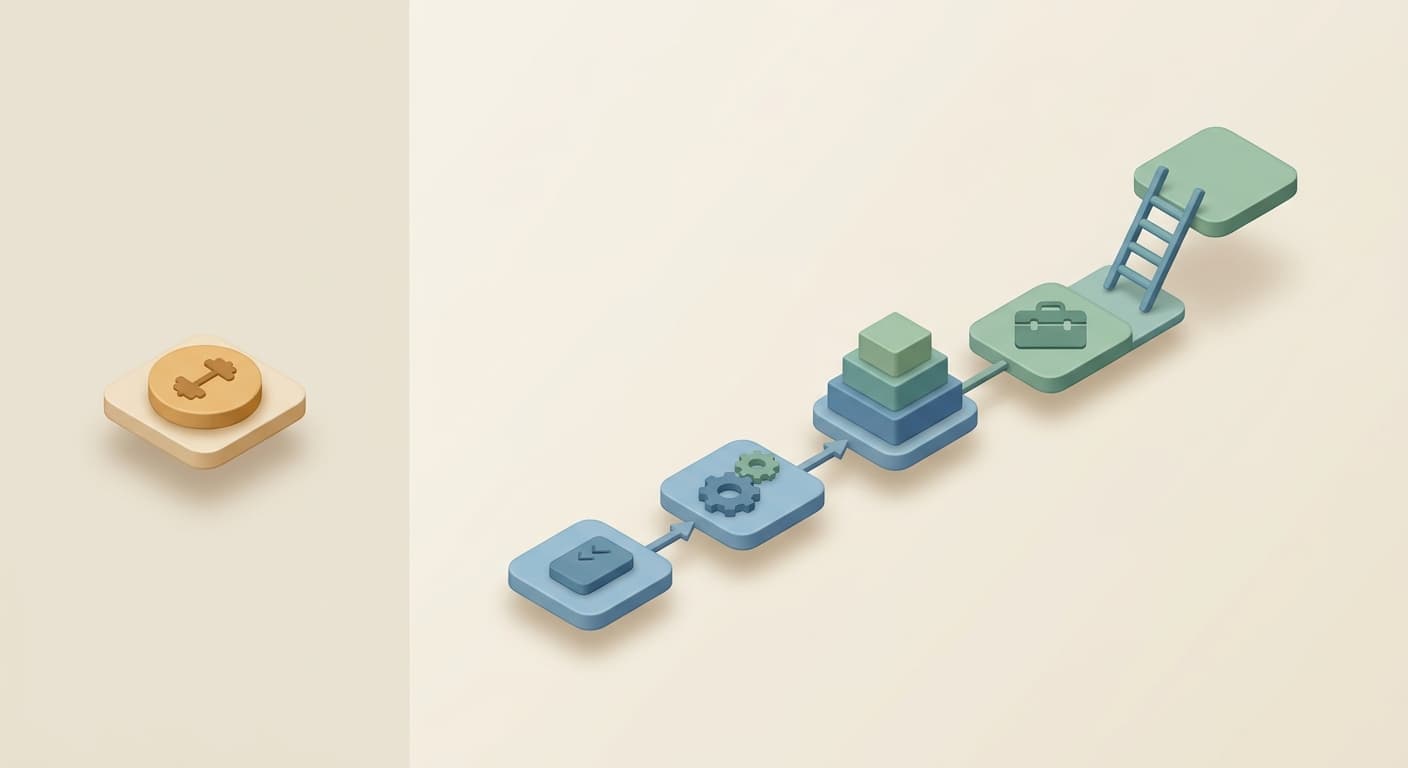
A 2025 paper reporting two randomized experiments compared individual learning, collaborative learning, and individual preparation followed by collaboration. The hybrid condition, prepare first then work together, produced better outcomes than pure collaboration or pure solo work on both immediate tests and longer-term retention. The authors explain the advantage through information processing: when each person arrives with a rough map, the group can spend its time correcting and integrating maps instead of building them from scratch.
In plain terms, when no one has a map, the group draws a confident map together and often misses the dead ends. When each person starts with a map, the group can fix the errors.
Decision guide
Instead of asking "group or solo," answer three questions.
What's my goal? If you are acquiring basics, lean solo. If you are practicing a repeatable skill, lean solo. If you are transferring knowledge to messy, applied prompts, lean group.
What's my bottleneck? If you keep getting distracted, go solo. If you keep making the same conceptual mistake, go group, but make it a feedback-oriented session.
Prepared and structured? If everyone has done some individual prep, group work will be sharper. If the group has a clear artifact at the end, solved problems, an outline, or explained answers, it stays honest. If neither is true, default to studying alone.
Make each mode work
Design matters more than personality.
Make solo study active Solo studying fails when it becomes passive rereading. A stronger pattern is short reading followed by retrieval practice: close the material, write what you remember, check, and repeat. That trains access, not just exposure.
Make group time do the hard parts A high-functioning study group usually includes a short solo prep window, a shared set of questions or problems, norms that treat confusion as valuable, and a way to verify answers rather than simply agreeing. If you do only one thing, start each session by having each person explain one concept in their own words. Explanations reveal gaps quickly and give the group something concrete to improve.
Practical session structure Begin with 10 to 20 minutes of silent individual review. Spend the next segment on one-person explanations and targeted questions. Finish by testing or writing a short agreed summary so the group leaves with a verified artifact.
Limits and uncertainty
The evidence is real but uneven. The strongest studies show a clear advantage for the prepare-then-collaborate model in specific settings, including some professional-education contexts. Other classroom comparisons and literature reviews point in the same direction but are not universal.
The biggest practical factor is not the label "group" or "solo" but whether the session is designed to produce retrieval, feedback, and correction. Different subjects and different groups will vary, so treat the guidance as directional rather than absolute.
Calm synthesis
Studying alone is where you build the first version of understanding at your own pace. Group learning is where you pressure-test that version, especially when you need explanation, application, and error correction.
Most of the time, the best answer is not either or. It is, solo first, then together.
If you want a simple plan for the next week, do your first pass alone, then use a group session to explain, argue, and correct. That combination tends to produce both mental clarity and learning that sticks.