
The trap
When people ask how much of their mental state is controllable versus biological, they often imagine a clean split, like 50 percent choice and 50 percent biology. Neuroscience does not support that picture.
A mental state is not produced by one switch in the brain. It is an emergent state created by interacting systems involved in arousal, interoception, threat detection, reward prediction, memory, attention, habit, and social evaluation. These systems constantly exchange signals between brain and body. That means your state is always biological, but not always fixed.
A more useful question is this: what in your current state is automatic, what is influenceable, and on what time scale can it change? That framing is less simple, but much closer to reality.
A neuroscience-based model
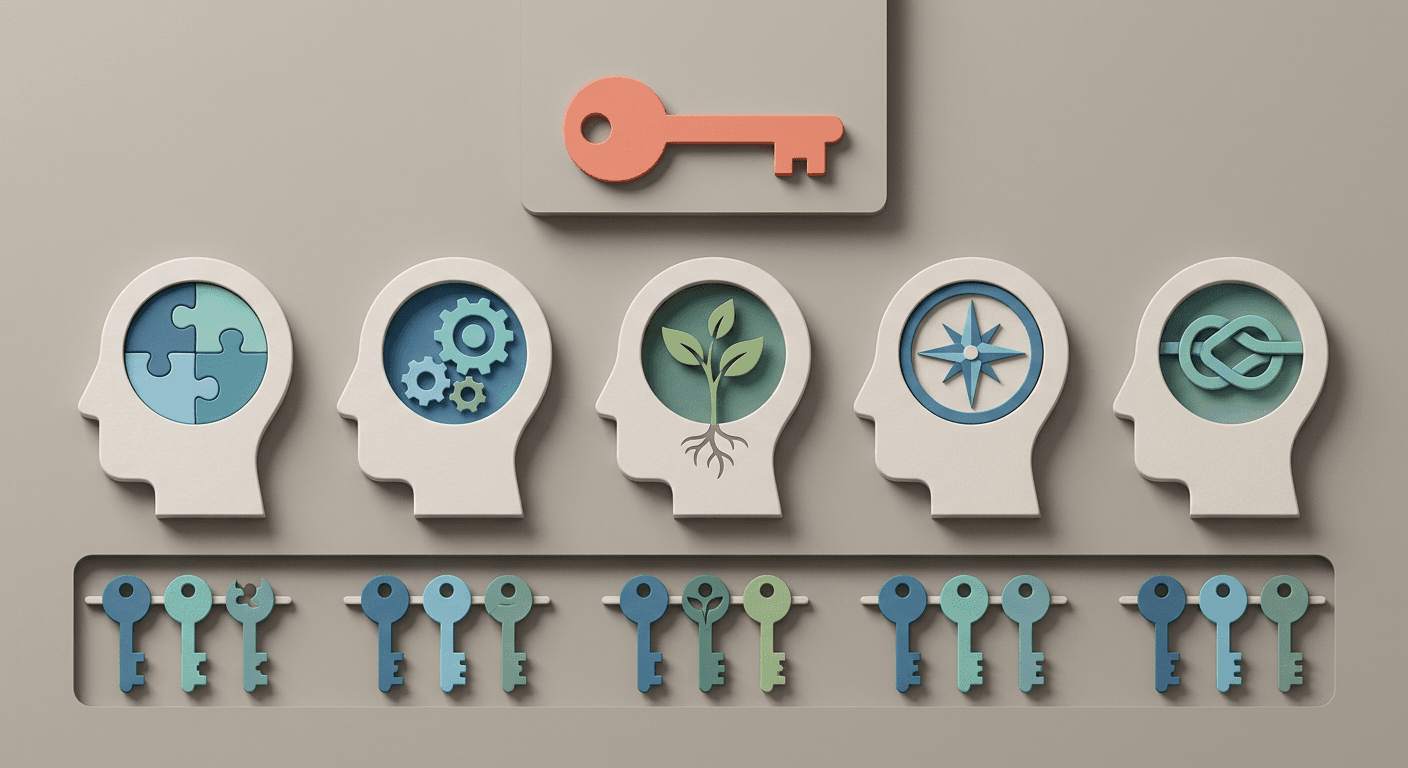
A practical way to think about mental states is through three layers: predispositions, state shapers, and control points.
Predispositions
Predispositions are the biological tendencies you did not consciously choose. They include temperament, sensitivity to stress, reward responsiveness, baseline arousal, and how strongly your nervous system reacts to uncertainty or social threat. These are shaped by genetics, early development, hormonal patterns, and prior learning.
They do not dictate one outcome, but they do influence what your brain treats as salient, threatening, or rewarding.
State shapers
State shapers are slower biological variables that can move over days, weeks, or months. These include sleep quality, circadian rhythm, chronic stress load, physical activity, inflammation, medication effects, substance use, and repeated learning. They alter how easily your brain enters certain states.
For example, sleep deprivation increases emotional reactivity and weakens regulatory control. Chronic stress can make threat-processing systems more easily triggered. Repeated calming routines can gradually make stress responses less sticky.
Control points
Control points are the places where deliberate action can influence the system. Usually this does not mean controlling whether a feeling appears. It means influencing what happens after it appears.
Control points include where you place attention, how you breathe, whether you move or freeze, whether you approach or avoid, how you interpret sensations, what inputs you consume, and whether you co-regulate with another person. These actions affect neural activity indirectly by changing incoming signals and learned predictions.
That is the key distinction: conscious control rarely overrides biology directly. It works by changing biology through input, repetition, and context.
What “biological” actually means
People often hear the word biological and assume it means permanent. That is too crude.
From a neuroscience perspective, a mental state is biological because it depends on patterns of neural firing, neurotransmitter signaling, hormonal input, autonomic activation, and body-based feedback. Your level of tension, motivation, sadness, focus, or calm is not separate from the brain and body. It is generated by them.
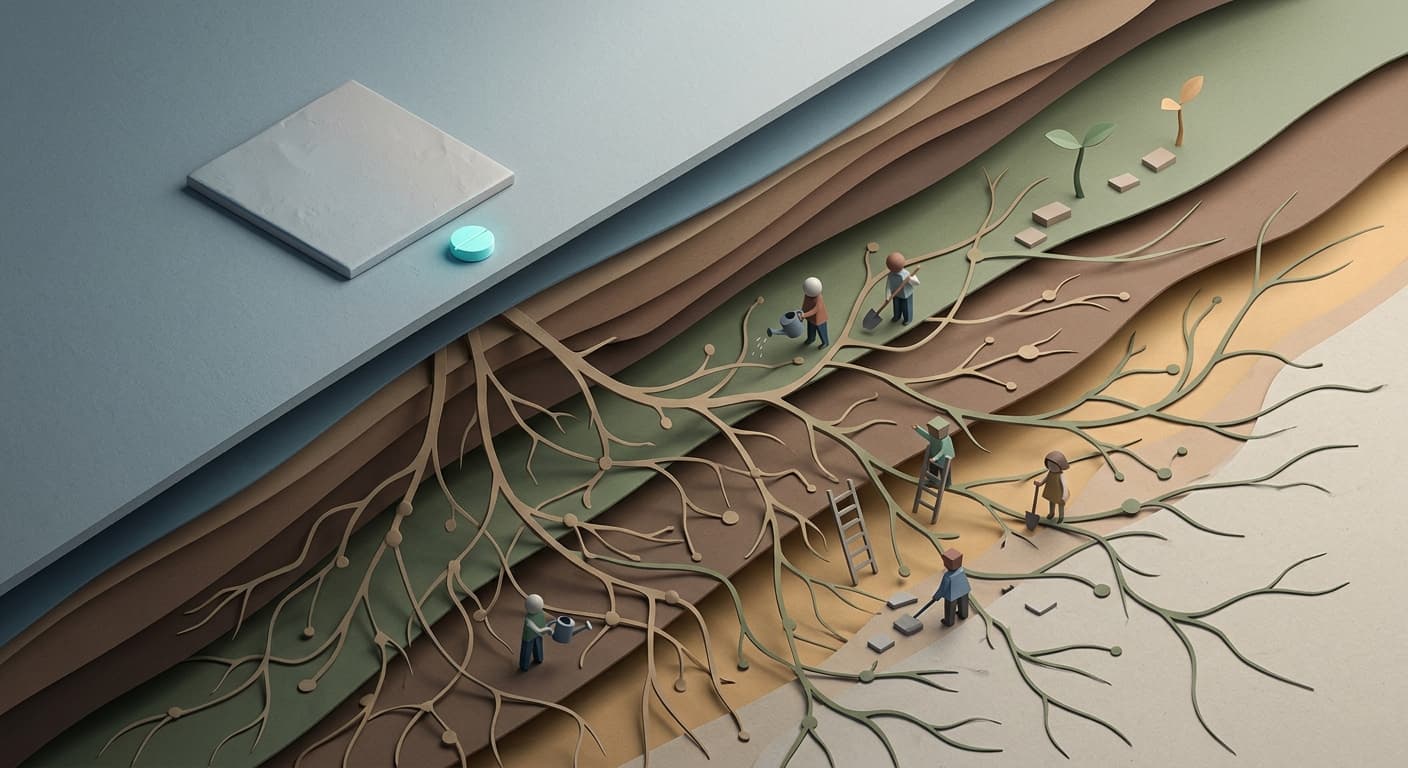
But the brain is plastic. Synapses strengthen or weaken with repeated use. Stress systems recalibrate. Attention changes what gets processed. Habits alter which networks activate automatically. Biology is the mechanism of change, not the opposite of change.
Why emotions often arrive before control
One reason people feel powerless is that emotion usually starts faster than reflection.
The brain does not wait for a full rational analysis before shifting the body into action readiness. Salience and threat systems can trigger changes in heart rate, muscle tension, vigilance, and attention within fractions of a second. By the time you “notice” anxiety, irritation, or shame, part of the response is already underway.
This is why the first wave of feeling is often not chosen. In real life, control shows up later, in whether you escalate the state, reinforce it, interpret it catastrophically, or help the system settle.
That is not fake control. It is the kind of control human nervous systems actually allow.
The brain systems involved
It is tempting to talk about one “emotion center” and one “rational center,” but that is misleading. Mental states come from networks, not isolated parts.
Threat and salience processing involve regions such as the amygdala, insula, anterior cingulate cortex, and brainstem systems involved in arousal. Regulation, planning, and reappraisal often recruit parts of the prefrontal cortex. Memory systems such as the hippocampus help determine whether the present feels safe, familiar, or dangerous based on past experience.
These systems are deeply connected. Emotion changes attention. Attention changes perception. Perception changes interpretation. Interpretation changes autonomic output. The loop is continuous.
So the real question is not whether biology or choice wins. The question is where in the loop you can intervene.
What control usually means in practice
In everyday life, control is usually more modest and more powerful than people expect.
It often means:
- reducing the probability of entering a bad state,
- reducing the intensity of a state once it begins,
- reducing how long the state lasts,
- choosing behavior that does not strengthen the state,
- helping the body return to baseline more efficiently over time.
For example, someone may not be able to stop an anxious surge from appearing. But they may be able to notice it earlier, avoid adding catastrophic interpretation, slow breathing enough to reduce physiological amplification, and choose not to avoid the situation. That changes the learning signal the brain receives.
Over time, those repeated responses can alter future reactivity. That is one of the most important ways control becomes biological change.
Hidden control points that matter more than willpower
People often overestimate direct thought control and underestimate indirect regulation.
Attention
Attention is not neutral. What you repeatedly monitor becomes more behaviorally important to the brain. Repeatedly scanning for danger, rejection, or failure trains the system to keep prioritizing those signals. Redirecting attention does not erase reality, but it can reduce unnecessary amplification.
Interpretation
The brain is constantly predicting what sensations mean. A racing heart can be coded as danger, embarrassment, effort, or excitement. Interpretation changes downstream physiology. This is one reason cognitive reappraisal can genuinely alter emotion rather than merely describing it differently.
Behavior
Behavior is one of the strongest levers because it changes the feedback your brain receives. Avoidance teaches the system that a trigger required escape. Movement can discharge arousal. Exposure can update threat predictions. Reaching out to a safe person can lower stress through social regulation.
Body state
Mental state is heavily constrained by physical state. Low sleep, hunger, illness, hormonal shifts, pain, and substance effects can narrow your range of regulation. In these cases, trying to “think your way out” may be much less effective than changing the body conditions first.
Why biology can feel like destiny
Biological states often feel absolute from the inside. When your nervous system is highly activated, it does not just create feelings. It changes what seems true, urgent, and possible.
Under high stress, attention narrows. Threat cues become more salient. Ambiguity looks more negative. Future thinking gets worse. This is one reason people in dysregulated states often conclude, “This is just who I am,” when they are actually experiencing a temporary brain-and-body configuration.
That feeling is real, but it is not always a reliable map of what is possible with time, recovery, and repeated regulation.
Research also suggests that when people are taught purely biological explanations for distress without any sense of plasticity, they may infer that improvement is less likely. A more accurate message is that distress is biological and often modifiable.
What is least controllable
Some parts of mental life are only weakly controllable in the short term.
Baseline temperament is relatively stable. Some people are naturally more reactive, more novelty-seeking, more threat-sensitive, or more reward-driven. That does not mean change is impossible, but it usually means change is gradual.
The initial emergence of emotion is also often low-control. You usually do not choose the first spike of fear, shame, grief, or anger.
And when physiology is heavily disrupted, control narrows further. Severe sleep loss, acute illness, withdrawal, burnout, chronic pain, or overwhelming stress can all reduce access to reflective regulation. In those moments, practical supports often matter more than insight.
What becomes more controllable over time
The hopeful part is that the brain changes through repeated experience. Neuroplasticity is not magic, and it is not instant, but it is real.
Over time, people can often change:
- how quickly stress spirals,
- how strongly certain cues trigger threat responses,
- how often rumination loops begin,
- how much avoidance shapes daily life,
- how quickly the body returns to baseline,
- and how automatic certain helpful behaviors become.
This usually happens less through heroic effort and more through repetition. Small actions done consistently can reshape future default states because the brain learns from what is repeatedly practiced.
A more honest answer
How much of your mental state is controllable versus biological?
Neuroscience suggests the answer is: your mental state is biological at every level, and some of it is still influenceable.
You do not choose your full wiring, your initial thresholds, or your first wave of feeling. But you can often influence attention, interpretation, behavior, environment, and physiology in ways that change the next phase of the state and, over time, the baseline from which future states emerge.
That is why the most useful question is not “Is this my fault?” or “Is this just biology?” It is: what part of this system can I influence next?
That question creates agency without denying reality. And for most people, that is a far more accurate and compassionate way to understand the mind.