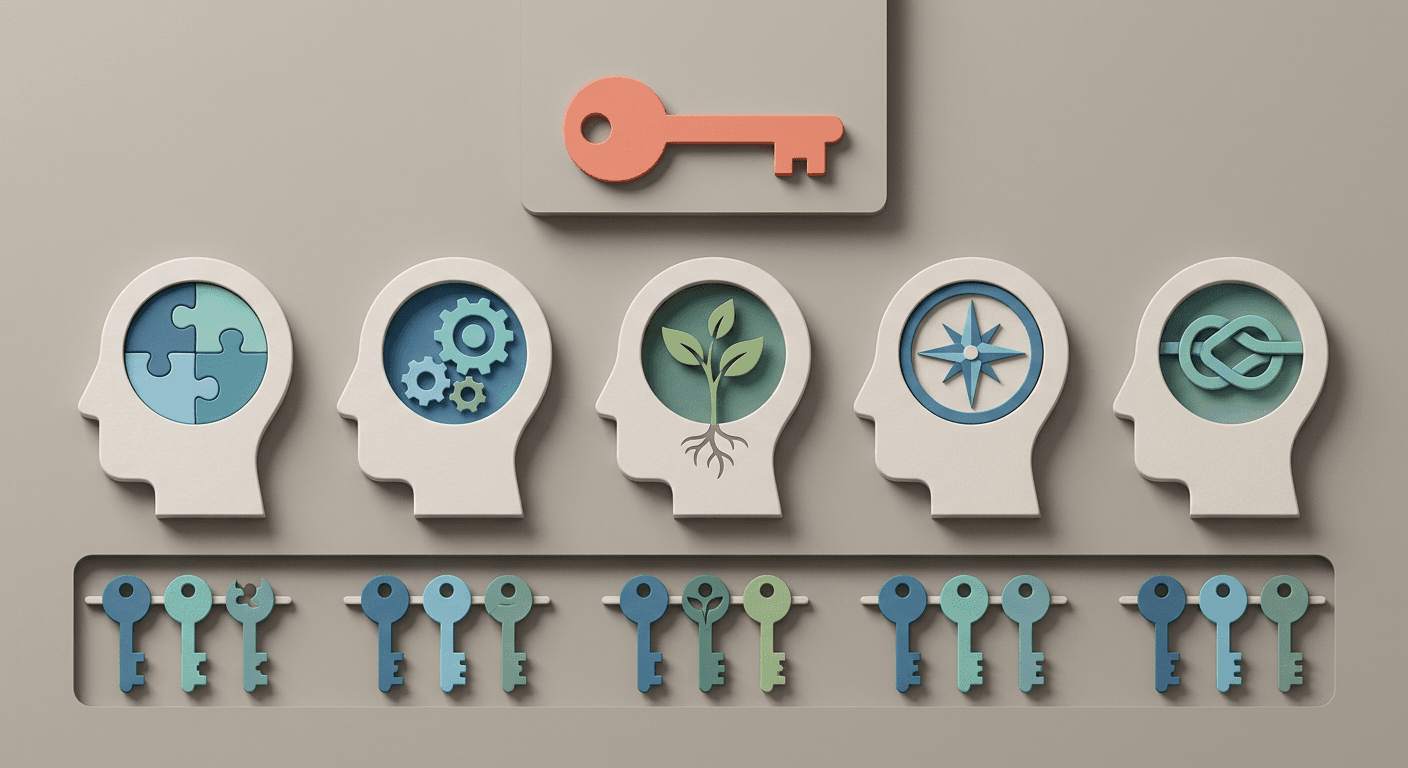

A better model
If you search "regulate dopamine levels," you will quickly find two ideas that sound helpful but usually create confusion. The first says dopamine is a simple "pleasure chemical." The second promises you can "detox" or "fast" your dopamine back to normal.
A more useful model is this: dopamine helps with motivation, learning, and reward prediction. It helps your brain notice cues, invest effort, and update what is worth pursuing next. That is why dopamine spikes in anticipation as well as in enjoyment, and why it reacts strongly to novelty, uncertainty, and the promise of reward.
So, regulating dopamine in everyday life is rarely about setting a target level. It is about stabilizing your reward system so motivation is less brittle, attention is less hijacked, and rewards feel proportional again.
What happens underneath
Dopamine is released by specific neurons and received by circuits that guide action selection, learning from outcomes, and assigning salience, which is what feels important right now.
Two practical implications follow from that biology. First, dopamine signaling is dynamic and context dependent, not a fixed reservoir you can drain. Release varies across brain regions and across release sites, so your motivation can feel inconsistent across situations, even on the same day. Second, dopamine is tightly linked to learning loops. When a cue reliably predicts a reward, your brain starts responding to the cue. Over time you can end up chasing the cue itself, like a notification tone, the sight of snacks, or the first tab you always open.
In short, regulating dopamine is mostly about regulating cues, expectations, and reinforcement.
Why detox fails
The phrase "dopamine detox" implies dopamine is a toxin and your brain needs a hard reset. That is not how dopamine physiology works.
Most dopamine fasting practices are actually behavioral resets, where you remove high-cue, high-novelty, high-reward activities for a while so you can reintroduce them more deliberately. That can be useful, but the mechanism is breaking reinforcement loops, not lowering dopamine to some baseline.
A more practical question to ask is, what in my environment repeatedly triggers wanting without producing real satisfaction or progress? That is the lever you can use.
Manage prediction
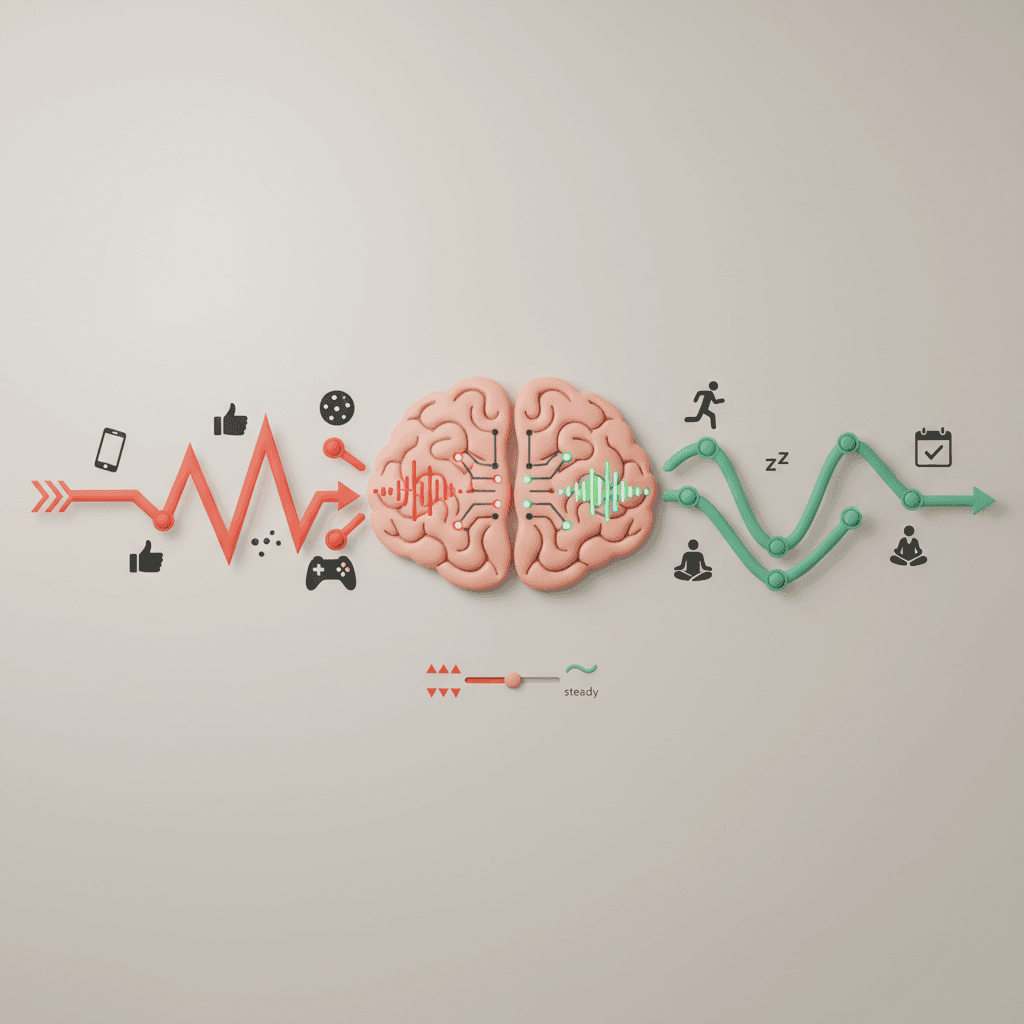
A simple and effective approach is to focus less on pleasure and more on expectation. When rewards are frequent, immediate, and unpredictable, your brain learns to keep checking. That is why feeds, gambling mechanics, and constant multitasking can scatter your motivation. Your attention trains toward possibility, not follow-through.
To regulate this, aim for fewer "maybe rewards" and more "earned rewards." This does not mean life should be joyless. It means tying rewards to actions you endorse, and to timescales that support depth.
Expectation reset
Choose one area where your brain expects rewards too easily, for example checking your phone, snacking when not hungry, switching tasks when something gets dull, or refreshing for messages. For seven days, make the reward slightly harder to access, but still allowed.
Examples: check social apps only after a 10 minute walk, only snack after drinking water and waiting 10 minutes, or switch tasks only after writing down the next action on the current one. The point is not punishment, it is retraining the cue to reward connection so your day is not run by impulses.
Design your cues
If dopamine helps assign salience, your environment is a dopamine strategy whether you plan it or not. Cues that repeatedly win attention grow stronger, and cues that are invisible weaken. This is not a willpower problem, it is what your brain has been trained to notice.
Two high leverage moves are to make big distractions harder to start, and to make important actions easier to start. For example, put social apps off your home screen or require a login, keep your phone out of the bedroom, open your computer to the document you want to work on instead of a browser, and make the good default visible, like a book on the table or shoes by the door.
This is regulation through friction and convenience. The brain follows the path that starts easily.
Stable rewards
When people say they feel "low dopamine," they often mean nothing feels worth the effort. One reason is that high intensity rewards make normal rewards feel flat by comparison. If your day is built around constant novelty, quieter satisfactions can lose their pull.
The antidote is not eliminating pleasure. It is practicing stable, dependable rewards. Your brain learns these are worth pursuing. Examples include a daily walk at the same time, a simple strength routine you can do on low energy days, cooking a meal with music instead of scrolling, or a short creative practice with a clear endpoint. Consistency reduces uncertainty, and less uncertainty reduces checking and scattered effort. Stable rewards help effort feel coherent again.
Social interaction
Dopamine responds to social context as well as to objects or achievements. Some measurements in humans suggest dopamine can be higher during real human interaction compared to computer interaction. The details are specific, but the everyday pattern is familiar: isolation can flatten motivation and meaningful interaction can restore it.
A practical experiment is to schedule three real contact moments per week for two weeks, meaning voice or in person, not just text. Notice whether your baseline drive improves, especially for tasks that need persistence.
Mindfulness and urges
Mindfulness is often described as relaxation, but the more relevant mechanism for dopamine regulation is that it changes your relationship to cues and urges. If an urge automatically becomes an action, your reward system learns cue equals behavior equals reward. Mindfulness creates a pause where you can feel the urge without immediately completing the loop.
Reviews of behavioral resets and holistic approaches often highlight practices like meditation and yoga as helpful for self-regulation. The exact dopamine effects vary, but the applied value is clearer control over compulsive checking and impulse driven choices.
If you want a minimal practice, try this once per day: when you notice the impulse to check something, take three slow breaths before acting. If you still check, that is fine. The benefit comes from building the gap.
Basics matter
It is tempting to look for a single hack, but dopamine signaling depends on overall physiology. Dopamine is synthesized from precursor molecules, so adequate nutrition and general dietary quality matter more than any single "dopamine food." Sleep, stress, and illness also influence how effectively your brain regulates motivation. If those systems are strained, routines will be harder to hold. That is not personal failure, it is a systems constraint.
If you suspect a medical issue, or you are experiencing severe anhedonia, compulsions, or mood symptoms, it is appropriate to consult a clinician. This article is about everyday regulation, not treatment.
Weekly plan
If you want a practical, non-mythical plan, try this four week structure.
Week 1, remove one high cue trigger. Pick one app, one snacking pattern, or one checking loop, and add friction. Week 2, add one stable reward, such as a daily walk, a simple workout, or a short creative routine. Week 3, upgrade social input with three real conversations a week, even if brief. Week 4, practice a daily pause, one small "urge pause" to weaken automaticity.
Track progress in a reflection tool or a notebook to notice what cues precede unhelpful spirals and which routines stabilize motivation.
What it looks like
Regulating dopamine is less about forcing yourself to feel motivated and more about changing what your brain learns is worth chasing. When it is working, you will likely notice you reach for your phone less automatically, boredom becomes tolerable again, small wins feel real, you can start tasks without needing a dramatic mood shift, and pleasure feels less spiky but more satisfying.
This is a good trade. Not because dopamine is balanced like a thermostat, but because your environment, expectations, and reward loops are finally pointing in the same direction.