
Motivation as a chain
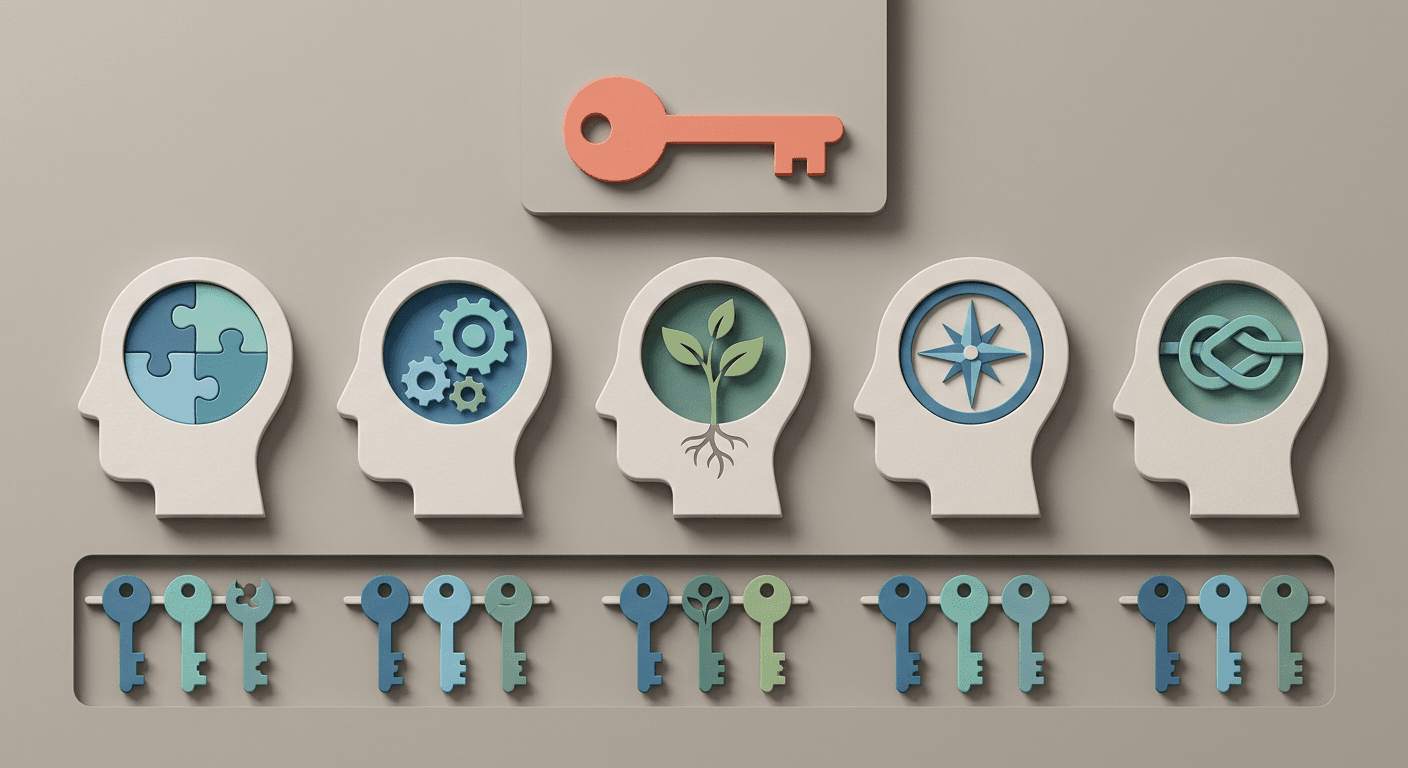
People often talk about motivation like a fuel tank, either full or empty. In reality, motivation works more like a chain of small decisions your brain updates constantly:
- Is this outcome valuable now?
- Do I believe my effort will work?
- What specific action should I take next?
- Did that action produce a payoff the brain remembers?
If any link is weak, wanting and doing can separate. That is why you can have a clear goal and still procrastinate, or why you can repeat a task daily without feeling inspired. Understanding motivation means looking at the links, not blaming a single vague "lack of will."
What the brain does
A useful way to understand motivation is to separate three processes that are often mixed together.
Valuing: what matters
A goal is more than a sentence you repeat, it is a way to assign value. Motivation depends on systems that represent how worthwhile an outcome is, and then compare that value against costs. Costs include obvious things like time and effort, and subtler things like uncertainty, social risk, or the feeling of giving something up.
In plain terms, motivation starts when "this matters" becomes more compelling than "not now." Neuroscience calls this value computation, and it is what makes one option stand out among many.
Expecting: will effort pay
Valuing a result is not enough. You also need a belief that effort will lead to it. Expectancy theory frames motivation as the product of three factors:
- Valence, how much you value the outcome.
- Expectancy, whether you believe you can perform the behavior.
- Instrumentality, whether you believe the behavior will produce the outcome.
Because these factors multiply, motivation can collapse if any one is near zero. You might deeply value getting fit, but if you do not believe you can stick to workouts, your expectancy is low. Or you might be willing to try, but if the system you work in rewards politics rather than performance, instrumentality is low. That is why motivation often fails in broken systems, not because of personal weakness.
Learning: what gets repeated
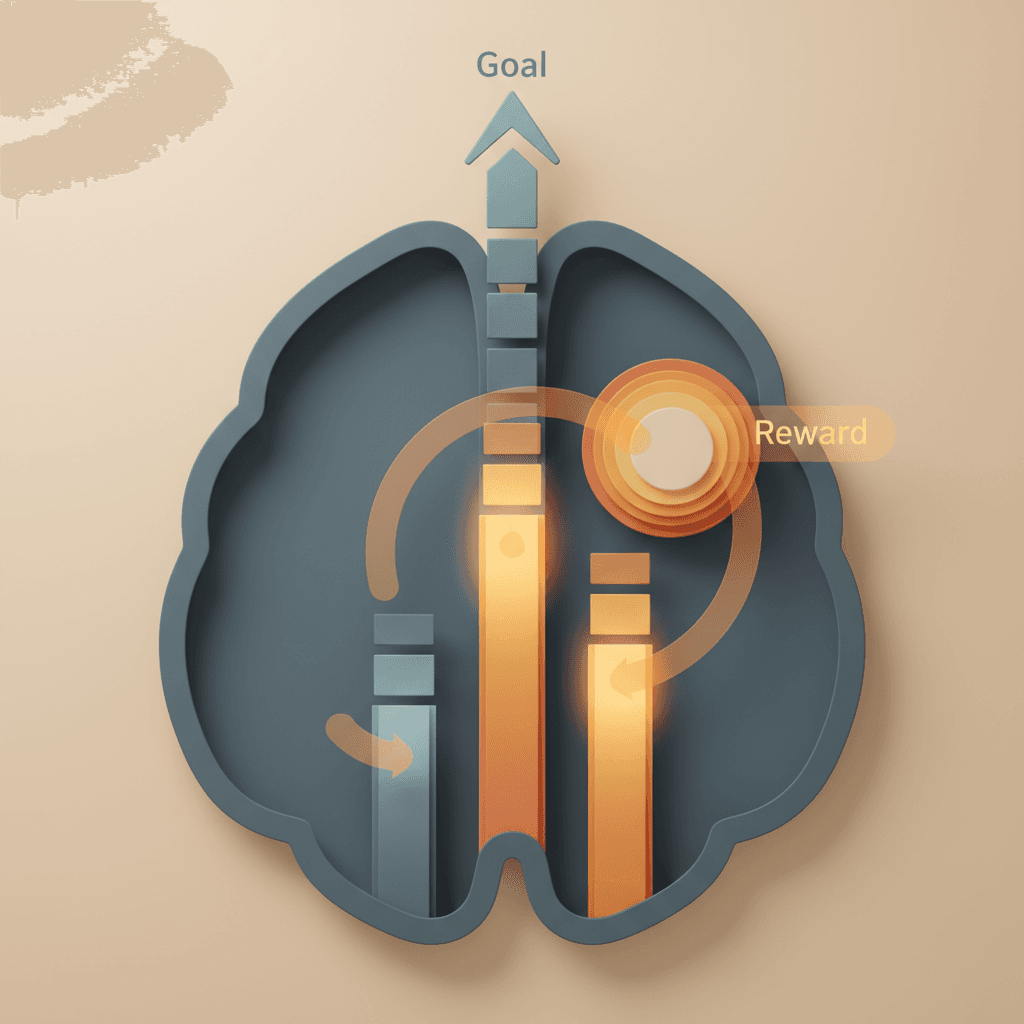
Rewards do more than feel good, they teach. When an action reliably leads to a rewarding outcome, your brain biases itself to choose that action again in similar contexts. Over time this turns into habits and into easier selection of the same goals, sometimes even when you are not thinking much.
This is why immediate feedback matters. Rewards close in time to the action make the brain link action and outcome more strongly. Over repeated cycles, reward learning can make some goals easier to pick and pursue, so you are not always starting from zero.
Goals are constraints
Goals are most helpful when they reduce ambiguity. Without a goal your brain must decide moment to moment what counts as "good enough." That extra decision work is friction, and often what people call "low motivation."
A clear goal narrows choices. It answers what counts as progress, what the next step is, and what you should say no to. That lowers decision load and makes reward signals easier to detect.
But goals can also backfire. If every check-in feels like failure, engaging with the goal becomes punishing. Over time the brain learns to avoid that negative experience. How feedback is framed matters. When people feel autonomy and personal endorsement of a goal, corrective feedback is more likely to be processed as useful information instead of a threat.
Rewards teach behavior
Rewards are not only external prizes like money or points. They include internal experiences such as interest, pride, relief, and social connection. Rewards can be immediate or delayed, and timing changes how strongly the brain links action and outcome. The closer the reward to the action, the stronger the association.
Immediate positive experiences during the activity help sustain long-term goals. For example, if exercise only pays off as a future health outcome, you rely on delayed reward. If exercise also pays off in the moment, through music, an enjoyable route, or a sense of calm afterward, motivation becomes more durable. In other words, making the process itself rewarding trains the brain to pick that activity again.
Wanting vs doing
Strong desire does not automatically produce action. Wanting and acting can separate for several reasons:
- The goal is valued, but the next step is unclear.
- The outcome is valued, but you doubt your ability to achieve it.
- The action is clear, but the immediate reward is negative, such as boredom or discomfort.
- The environment keeps cueing a different, more rewarding behavior.
Two people can want the same outcome and behave differently, not because of character, but because the invisible math of value, expectancy, and reinforcement runs on different inputs.
Motivation in daily life
It helps to locate which link in the chain is failing. Here are common patterns and practical interpretations.
Procrastination despite caring
When you delay something you actually care about, the problem is often the perceived cost or uncertainty of starting. If the first step is ambiguous, your brain predicts effort with an unclear payoff. Expectancy and instrumentality drop, and relief from postponing becomes the short-term reward.
A useful shift is to make the first action small and specific, just enough to restore a believable link between effort and payoff. This repairs expectancy without lowering the overall standard.
Unwanted habits
Some behaviors persist because they reliably produce immediate reward, even if they conflict with long-term goals. That is reinforcement without endorsement. In these cases, changing the reward landscape is usually more effective than just trying to remember your goals.
Fading motivation
Early motivation often comes from novelty and obvious progress. Over time, progress slows and the reward signal weakens. When the only reward is a distant finish line, motivation is fragile. If the process contains immediate satisfiers, those provide stepping stones the brain can learn to repeat.
Limits of the model
This explanation focuses on the common mechanics of motivation and learning. It does not fully capture clinical conditions such as depression, ADHD, or severe addiction, where motivation and reward processing can be altered in specific ways. It also does not cover the effects of chronic stress or sleep deprivation, which change how effort feels and how rewards register. Nor does it erase real social and economic constraints that make instrumentality low, even with high effort.
Sometimes the honest conclusion is that a goal is misaligned or the environment is currently dysfunctional, and redesigning rewards will not solve the underlying problem.
A calmer approach
Instead of telling yourself you "need motivation," ask diagnostic questions:
- Is this goal truly valuable to me, or only socially valuable?
- Do I believe my effort will work, and if not, what evidence would raise that belief?
- Does the process contain any immediate reward, or only delayed payoff?
- What does my environment reinforce when I am tired?
Treat motivation as an updating system. Goals shape what you value, rewards shape what you repeat, and expectations shape whether effort feels rational. When those three align, action often follows with less drama than you expect.