
Sick after deadlines
A common pattern is familiar: you push through a deadline, exam period, or family crisis. You hold it together while the pressure is on. But once it ends, you wake up with a sore throat, body aches, or that heavy fatigue that feels like a cold arriving right on schedule.
People often call this a cortisol rebound. That phrase points to something real, but it can make the process sound simpler than it is. There is usually not one single chemical snapback that suddenly makes you ill. What is more often happening is a mix of stress hormones, immune shifts, symptom masking, and timing.
In short, stress changes your body’s priorities. It helps you stay alert and keep functioning, but it also changes how your immune system behaves. When the stressful period ends, those signals shift again. That is often when symptoms become easier to feel.
What cortisol actually does
Cortisol is often called the stress hormone, but that label is a little too narrow. Cortisol is better understood as a regulating hormone. It helps your body manage energy, blood pressure, alertness, and inflammation during demanding situations.
It belongs to a family of hormones called glucocorticoids. That word sounds technical, but it simply refers to hormones that help regulate energy use and immune activity. In humans, cortisol is the main glucocorticoid.
When stress rises, cortisol helps your body do things like:
- release more usable energy
- stay mentally switched on
- support cardiovascular function
- keep inflammation from becoming excessive at the wrong time
That last point matters a lot. Inflammation is part of how the immune system fights infection, but inflammation also creates many of the symptoms we associate with being sick, such as fatigue, aches, feverishness, and low appetite.
The HPA axis, in plain language
To understand why symptoms can show up after stress ends, it helps to understand the body’s main stress-response pathway: the HPA axis.
HPA stands for:
- Hypothalamus
- Pituitary
- Adrenal axis
These are three parts of the body that work together like a signaling chain.
Step 1: The hypothalamus notices stress
The hypothalamus is a small part of the brain that helps monitor the body and keep internal systems balanced. When it detects a stressor, it sends out a chemical messenger called CRH, which stands for corticotropin-releasing hormone.
You can think of CRH as the brain’s first alert signal: something important is happening, get ready.
Step 2: The pituitary passes the message on
CRH tells the pituitary gland, another small gland at the base of the brain, to release ACTH, which stands for adrenocorticotropic hormone.
ACTH is basically the next messenger in the chain. Its job is to travel through the bloodstream and tell the adrenal glands to respond.
Step 3: The adrenal glands release cortisol
The adrenal glands sit on top of the kidneys. When they receive the ACTH signal, they release cortisol.
So the simplified chain looks like this:
- Stress is detected
- The hypothalamus releases CRH
- The pituitary releases ACTH
- The adrenal glands release cortisol
That whole loop is called the HPA axis.
How the stress system turns itself down
The HPA axis does not just switch on. It also has a built-in braking system.
As cortisol rises, it sends signals back to the brain and pituitary to say: we have enough stress hormone now, you can slow the response down. This is called negative feedback.
That phrase can sound abstract, but it just means the output of a system helps limit the system itself. A thermostat is a simple example. When the room gets warm enough, the heater stops. In the same way, cortisol helps tell the body when to reduce the stress response.
This matters because the stress response is meant to help in the short term. It is not designed to stay at full intensity for days or weeks without consequences.
Stress does not simply “turn off” immunity
A common misunderstanding is that stress just weakens the immune system like someone dimming a light switch. The reality is more complicated.
Stress often reshapes the immune response rather than simply shutting it down.
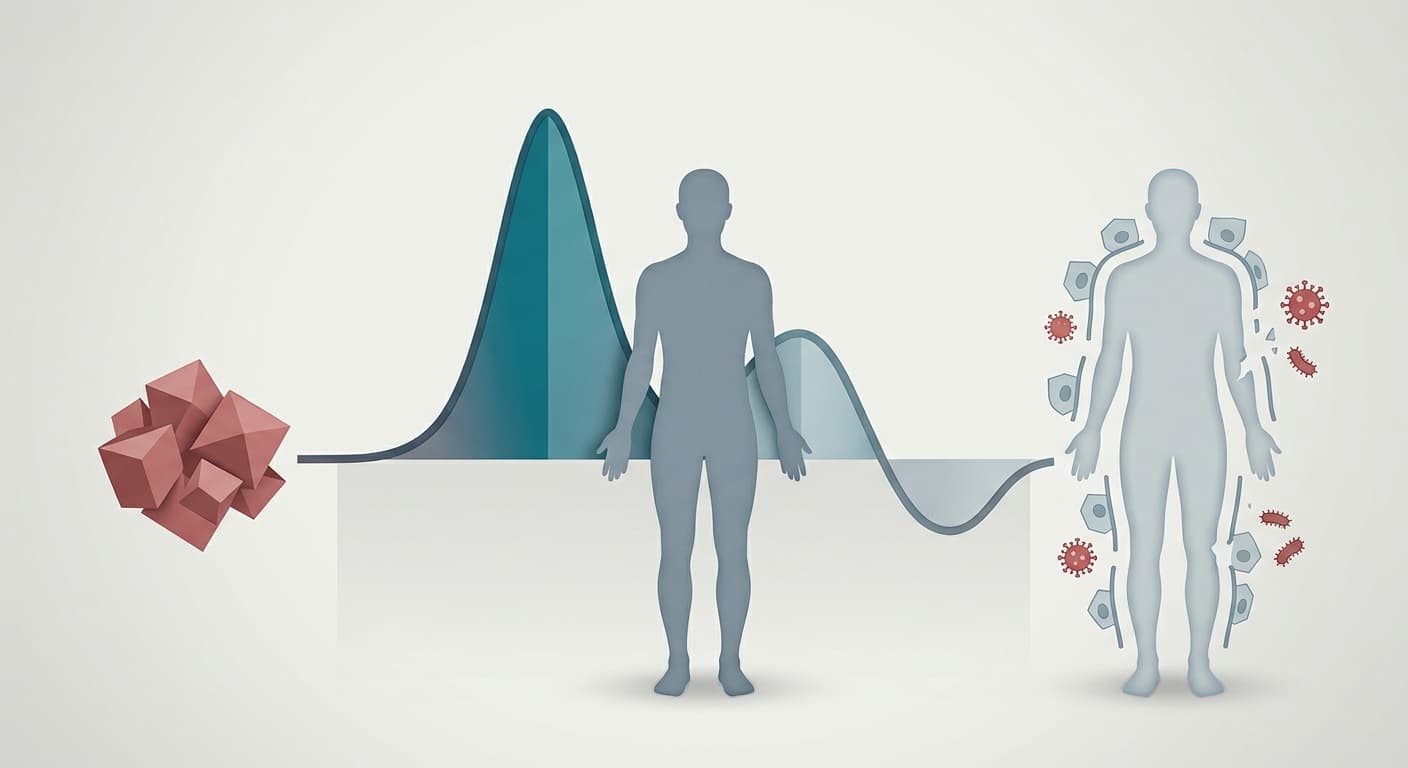
Short-term stress can temporarily enhance certain parts of immune readiness, especially the kind that would help you respond to injury or immediate threat. But when stress goes on for longer, the body starts making tradeoffs. More energy and attention go toward immediate survival and performance, and less goes toward slower repair and broader immune balance.
That is why it is more accurate to think of stress as reallocating resources.
What cortisol does to immune activity
Immune cells are able to “hear” cortisol because they have special docking points called receptors. A receptor is just a structure that receives a signal. In this case, many immune cells have glucocorticoid receptors, which means they can respond directly to cortisol.
When cortisol is elevated for a while, it can:
- reduce some pro-inflammatory signals
- support anti-inflammatory signaling
- slow down certain immune cell activities over time
- change where immune cells move and patrol in the body
This is sometimes called immune cell trafficking. That simply means immune cells are being redistributed, moving to different places in the body depending on what the system currently prioritizes.
These changes can help you stay functional during stress. But they can also mean that infection is not always handled in the same way it would be during a more rested, stable period.
So what is “cortisol rebound”?
Cortisol rebound is not a formal medical diagnosis. It is more of a shorthand phrase people use when they notice this pattern:
- stress is high
- cortisol is likely elevated
- the stressful event ends
- symptoms show up shortly after
The phrase is useful, but it can be misleading if it sounds like one hormone suddenly drops and directly causes illness. In most cases, the process is more layered than that.
Here are the main reasons symptoms often show up after stress ends.
1. You may have been getting sick already
One explanation is simple: you were already becoming sick, but you were less aware of it.
During stress, the brain prioritizes action. That can reduce how much attention you pay to fatigue, aches, or mild throat irritation. This is sometimes called symptom masking. The symptoms are not necessarily absent. They are just less noticeable while you are in push-through mode.
When the pressure ends, your awareness shifts. You stop overriding body signals, and the illness becomes more obvious.
2. Inflammation becomes easier to feel
Cortisol helps keep inflammation under tighter control. When stress eases and cortisol signaling changes, some of that restraint may also ease.
That does not mean inflammation is bad. Inflammation is one of the ways the immune system fights infection and repairs damage. But it is also what creates many “sick” feelings.
So after stress, you may not suddenly become ill in that exact moment. Instead, you may start feeling the inflammatory response more strongly in that window.
3. The timing of infection catches up with you
Many infections do not cause symptoms the moment you are exposed. There is usually an incubation period, meaning a delay between exposure and noticeable illness.
So if you were exposed to a virus during a stressful week, the symptoms may naturally appear a few days later, right when the deadline is over. That can make it feel like relaxing caused the illness, when the real explanation is that the timing lined up.
Stress may still play a role, just not always in the way people think. It may affect:
- sleep quality
- eating patterns
- alcohol or caffeine use
- recovery capacity
- exposure to other people
- immune readiness
In other words, stress can increase vulnerability, while the symptoms appear later.
Why chronic stress can increase your risk
The rebound idea explains why symptoms often appear after stress, but it does not fully explain why you got sick in the first place.
Chronic stress can raise the risk through several overlapping pathways.
Sleep disruption
People under stress often sleep less or sleep poorly. Sleep is one of the most important regulators of immune coordination. When sleep suffers, immune defense often becomes less efficient.
Behavior changes
Stress changes routines. People may skip meals, hydrate less, drink more caffeine, drink more alcohol, exercise differently, or spend more time in crowded environments. All of that can affect both exposure and resilience.
Longer-term immune changes
Over time, repeated stress can alter how immune cells respond to cortisol. You may come across the phrase glucocorticoid resistance. That means some immune cells become less responsive to cortisol’s regulatory signal.
In plain terms, the body may still be producing cortisol, but parts of the immune system are not responding to it as normally as they should. When that happens, inflammation can become harder to regulate.
A simple way to understand the chain
Here is the common pattern in plain language:
- A stressful period activates the body’s stress system.
- The HPA axis helps release cortisol.
- Cortisol helps you keep going by adjusting energy use, alertness, and inflammation.
- At the same time, prolonged stress may reduce sleep, change behavior, and make immune balance less stable.
- When the stressful period ends, stress signaling shifts.
- Symptoms that were developing in the background become more noticeable, or inflammatory symptoms become less restrained, or both.
- You feel sick after the stress is over.
This is why the after-period can feel like the moment your body “finally lets it happen.”
What this explanation does not cover
Not every post-stress crash is a viral infection.
Sometimes what shows up after stress is:
- a migraine flare
- eczema
- digestive symptoms
- an asthma flare
- extreme fatigue
- a general inflammatory crash
People also differ a lot in how their cortisol patterns work. Cortisol naturally changes throughout the day, and stress responses vary from person to person.
So while this pattern is common, it is not a complete explanation for every case. If your symptoms are frequent, severe, unusual, or getting worse, it is worth talking to a clinician.
What helps
If your goal is to reduce the “I always get sick after a stressful week” pattern, the most helpful strategy is usually not perfection. It is creating a softer landing.
Try to:
- protect sleep in the final stretch of a demanding period
- avoid going from full speed to total collapse overnight
- keep meals and hydration regular
- build in a decompression window if possible
- avoid stacking high-exposure social plans right after a long stress sprint
If you track your patterns in a reflection app or health tool, the goal is not to obsess over cortisol. The goal is to notice what tends to happen before the crash, so you can support recovery earlier next time.
Takeaway
Getting sick after stress often has less to do with one dramatic hormone rebound and more to do with timing, immune tradeoffs, and finally feeling what your body has been holding back.
Cortisol is a major part of that story. Through the HPA axis, it helps your body stay functional during stress and helps regulate inflammation. But when the stressful period ends, the system shifts. That is often when symptoms become visible.
So if you always seem to get sick after the deadline, the exam, or the family emergency, it does not mean the rest itself made you ill. More often, it means your body delayed the full experience until it had enough space to show it.