
Manage the load
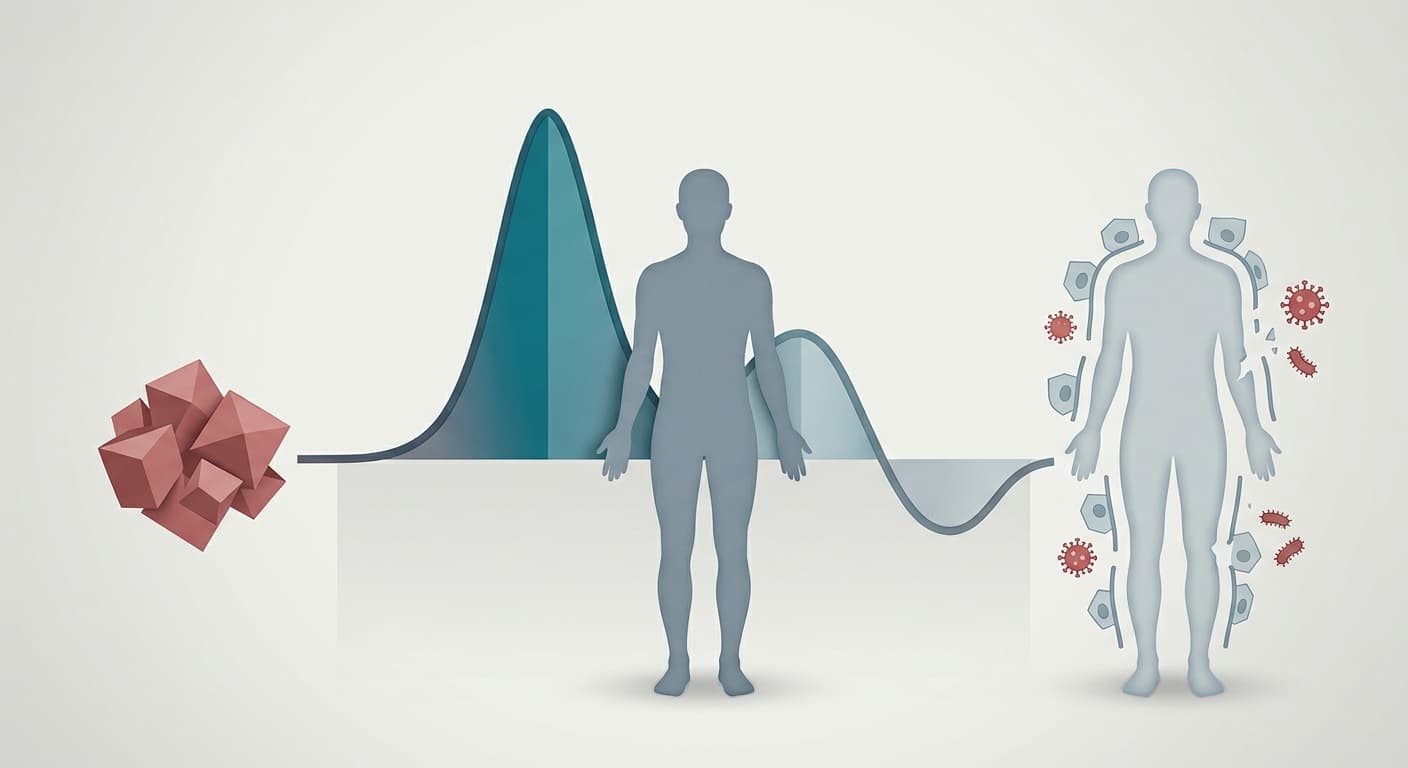
When someone says "I burned out," it often sounds like a sudden collapse. In reality, burnout usually develops slowly. Stress stays high and recovery stays low, and the gap becomes the new normal.
The World Health Organization describes burn-out as a work related phenomenon from chronic workplace stress that has not been successfully managed. It is marked by exhaustion, increased mental distance or cynicism toward the job, and reduced professional efficacy. That definition matters because it points to the mechanism. Burnout is not a personal defect. It is what happens when demand repeatedly exceeds capacity.
Preventing burnout means noticing the gap early, then reducing demand, increasing recovery, or both. Many plans fail because they try only to "toughen up" the person while leaving the load unchanged.
Burnout mechanism
Burnout tends to follow a predictable chain.
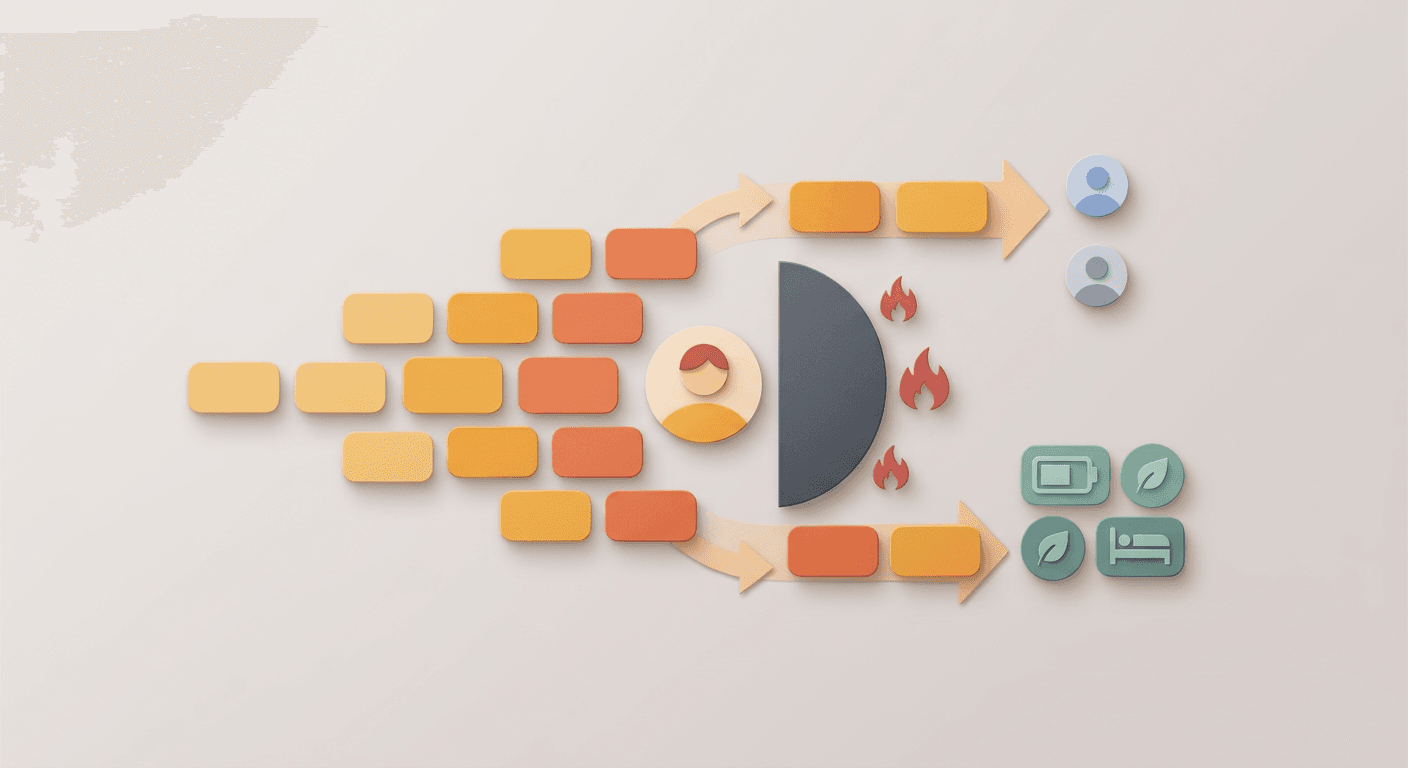
First, you adapt to prolonged stress. You shift into "get it done" mode and skip refueling. That can look like working late, thinking about work during time off, skipping breaks, or staying on alert at home.
Next, exhaustion appears. Not just tiredness, but a sense that rest does not restore you. When this persists, the brain looks for shortcuts to keep functioning. One common shortcut is emotional distancing, which shows up as cynicism, numbness, irritability, or treating people as problems to solve.
Finally, a drop in effectiveness follows. Tasks that used to feel manageable become effortful. Work may feel pointless, or you may assume you are failing even when you are not.
So prevention is less about raw resilience and more about completing stress cycles. Aim for effort followed by real recovery, not effort stacked on effort.
Early signs
Early signs can be subtle because they often look like responsibility. Watch for changes, not just isolated symptoms.
Exhaustion signals: You need more time to recover than before. Small tasks feel heavier. You wake up tired or rely on caffeine and adrenaline to get through the day.
Distance signals: You feel unusually negative about people you usually care about. You dread messages. Conversations feel numb, or sarcasm becomes your default tone.
Reduced efficacy signals: You procrastinate because starting feels costly. You recheck work, struggle to prioritize, or feel guilty regardless of output.
A practical self check is this question: Is my capacity shrinking? If your workload is similar but your coping bandwidth is dropping, that is a classic early warning.
Why it matters
Burnout is not only uncomfortable, it also lowers the quality of what you do. Research in healthcare links burnout with worse safety and lower satisfaction. Outside healthcare, chronic exhaustion narrows attention, reduces working memory, and makes complex decisions harder. Cynicism reduces collaboration, and lower efficacy increases avoidance and rework. Preventing burnout protects the quality of your work and the people who rely on it.
Risk factors
Burnout usually comes from a mix of system and situation, not a single cause. Two people in the same job can have different risk levels depending on recovery, boundaries, and role clarity. Still, common patterns repeat.
Workplace risks include high demands with low control, unclear priorities, constant urgency, too many responsibilities, low recognition, and cultures that reward after hours responsiveness. Managers who leave obstacles in place increase risk.
Personal and life context risks include perfectionism that makes "good enough" feel unacceptable, tying identity too tightly to work, weak recovery routines like poor sleep or no downtime, heavy caregiving responsibilities, and financial stress.
The goal is not to assign blame, but to locate leverage. Risk factors point to where prevention will actually help.
Prevention steps
Vague advice like "take care of yourself" does not change the balance between demand and recovery. A plan is a set of small, specific moves.
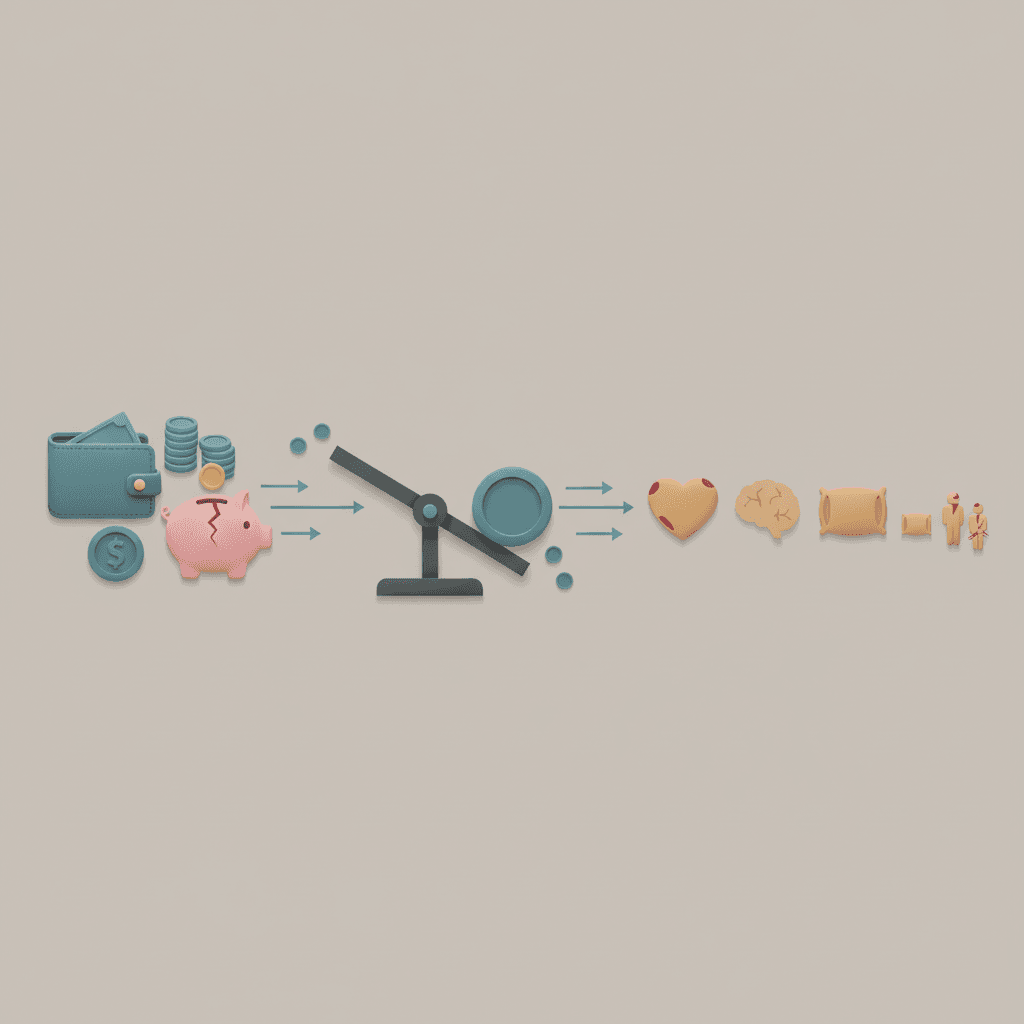
Step 1, name the load Write two columns. In one list demands: meetings, deadlines, on call expectations, emotional labor, context switching, commuting, caregiving. In the other list recovery: sleep, exercise, time outdoors, friendships, hobbies, quiet time, therapy, spiritual practice, anything that genuinely replenishes. Seeing the gap makes it easier to change.
Step 2, reduce one high friction demand Pick one demand you can reduce without redesigning your life. Examples are stop accepting meetings without an agenda, limit deep work to a realistic block and protect it, drop a nonessential responsibility for a month, or batch communications into two email windows instead of constant checking. Reducing a disproportionate drain often helps more than adding a new wellness habit.
Step 3, increase effective recovery Not all rest restores. Scrolling can feel like relief while keeping your nervous system stimulated. Choose one recovery behavior that produces a clear before and after effect on your body. For many people that is a short walk, a real lunch break away from the desk, strength training, a screen free hour at night, or a consistent bedtime. If you have only one lever, prioritize sleep. Good sleep compounds recovery and makes other changes easier.
Step 4, create a concrete boundary Boundaries fail when they are abstract. Make yours measurable. Instead of "I will work less," try "I will stop work at 6:30 pm on three weekdays" or "I will not respond to messages after 8 pm unless it is urgent." If you are in a role that requires after hours coverage, define predictable on call windows, escalation rules, and what counts as an emergency. Clear rules reduce chronic threat.
Step 5, ask for a structural change at work Burnout is defined as chronic workplace stress, so prevention cannot be only personal. A realistic request could be clarify top priorities for the next two weeks, rebalance workload across the team, adjust deadlines based on staffing, create a meeting free block, or add regular check ins that focus on obstacles, not just status. If you are nervous about asking, lead with quality impact, for example "To keep delivery reliable, I need fewer urgent requests and clearer priorities."
What works
Evidence from healthcare settings is instructive. A 2023 meta analysis of nursing interventions found that approaches combining clinical supervision and activities that address physical and mental well being produced stronger improvements than purely managerial or educational programs. That pattern supports a practical model: you need support that changes how stress is handled in the moment, plus habits that restore capacity. Information alone is rarely enough.
For managers
Managers shape daily experience more than most organizations admit. You do not need a grand wellbeing program to reduce burnout risk. You need fewer chronic stressors and more clarity.
Start with basics. Make priorities legible. Reduce role conflict by avoiding impossible combinations like speed, perfection, and constant availability without tradeoffs. Increase control where possible, autonomy is a major buffer when demands are high. Normalize recovery by encouraging breaks and time off, and by not punishing people subtly for using them. Use reasonable accommodations when someone is struggling, such as flexible hours, modified tasks, or supportive check ins.
A hidden but powerful skill is protecting focus. Constant interruption makes even moderate workloads feel impossible.
What prevention cannot do
A prevention plan cannot fix every situation. If your environment is structurally unsafe, abusive, or chronically overloaded with no path to change, the most honest step may be to plan an exit. Sometimes the system is the problem.
Also, burnout can overlap with depression, anxiety, grief, or medical conditions that affect energy and concentration. If your mood is persistently low, you are losing interest in most things, or you have thoughts of harming yourself, that is not only a burnout issue. Seek professional support.
Next step
Treat burnout prevention as load management, not a self improvement project.
If you want one immediate action, choose based on your experience:
- If you are exhausted, protect sleep and reduce one demand.
- If you are cynical, reduce exposure to the most draining interactions and add supervision or decompression time.
- If you feel ineffective, narrow priorities, define "done," and reduce context switching.
Mendro can help you reflect on what drains you, what restores you, and which boundaries you keep. The core work is the same, close the gap between stress and recovery before your body closes it for you.