
When responsibility burns out
Most people do not burn out because they care. They burn out because caring quietly becomes an always-on job.
Responsibility is not just a list of tasks. It is a mental contract, a sense that something is on you and that you will pay a price if it is dropped. That contract changes how your attention behaves. You scan for problems, recheck details, and keep unfinished things active in the back of your mind.
Short periods of vigilance are useful. Over time, constant vigilance becomes load. If that load has no clean stopping points and no real recovery, burnout looks less like a personal failure and more like a predictable outcome.
This article answers one question: how do you manage responsibility without burning out?
What happens underneath
Burnout is often described as exhaustion, cynicism, and reduced effectiveness. To manage it, you also need to understand the mechanism that creates it.
Demand, resource gap
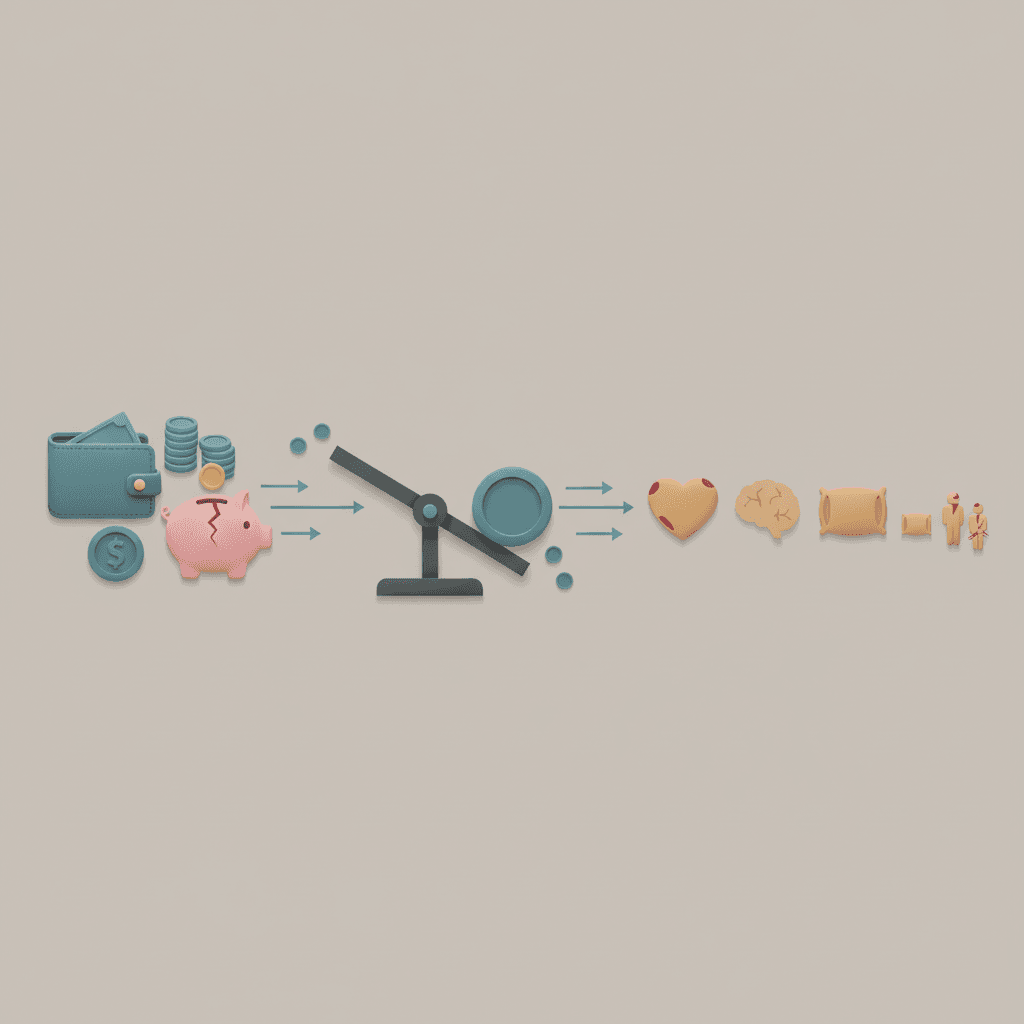
A straightforward lens is that burnout rises when demands stay high while resources remain flat.
Demands are more than hours. They include emotional labor, conflict, responsibility for outcomes, constant interruptions, and the pressure of consequences. Resources are what let you meet demands without breaking down, things like autonomy, clear priorities, supportive teammates, time to focus, and recovery.
Burnout risk grows when the gap between demands and resources becomes the normal state. You can tolerate a gap during a short crunch. You cannot live there indefinitely.
Attention and done
Responsibility overload is partly an attention problem. When something matters and is not finished, your mind keeps it accessible. That helps solve problems, but it also prevents you from fully leaving work, even when you stop physically.
If you have ever tried to rest while mentally tracking five open loops, you know the body might be on the couch while the nervous system stays at work. That ongoing activation is one of the main ways responsibility becomes chronic load.
Recovery as reset
Recovery is the process of returning to baseline. It is what makes tomorrow possible.
Responsible people often treat recovery as optional. They keep "earning" rest and never fully collect it. Over time, you pay for today with tomorrow's capacity. A sustainable approach is not about heroic discipline. It is about designing responsibility so it has edges, and designing recovery so it actually happens.
Redesign the load
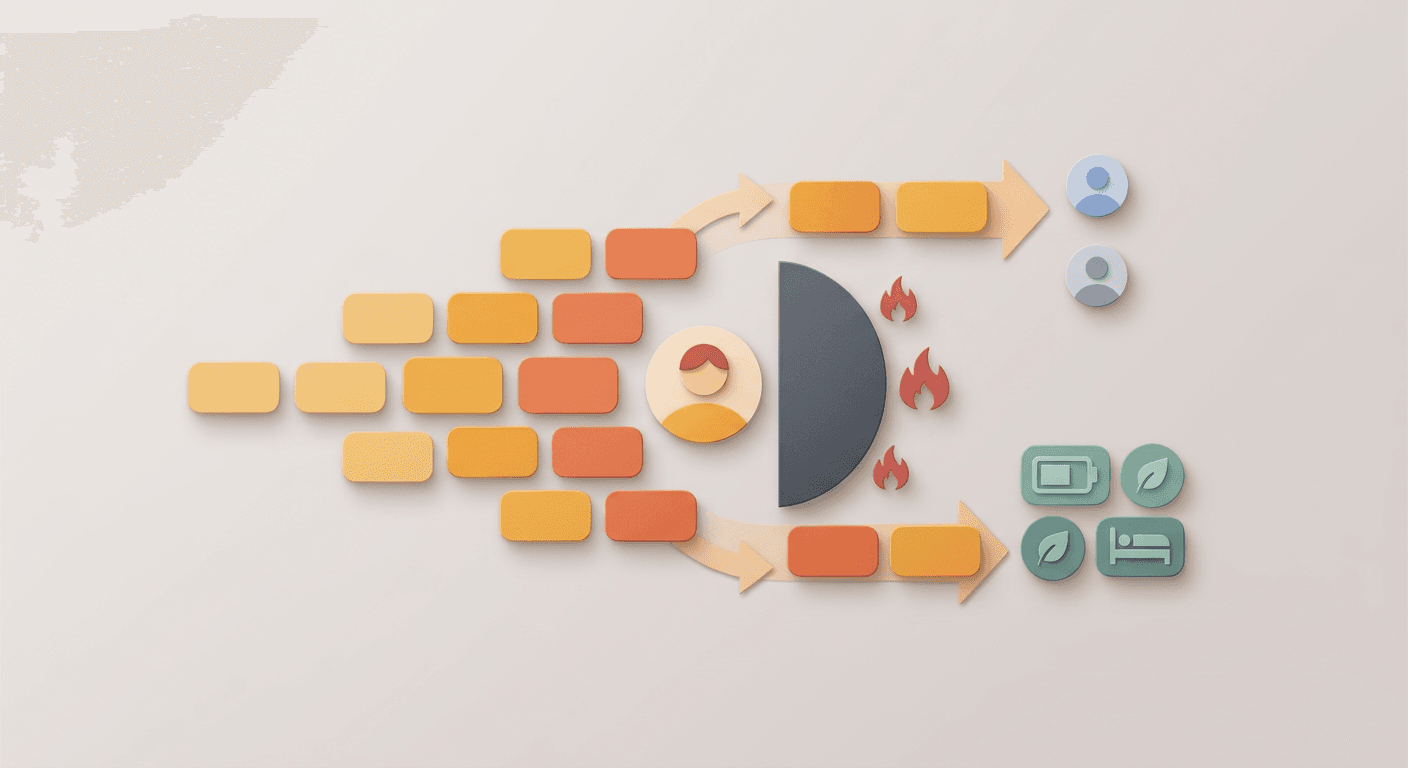
Shift your question from "How do I push through?" to "What kind of responsibility can my current system sustain?" Think in four levers: boundaries, delegation, attention, and recovery.
Set boundaries
A lot of advice tells you to say no more. That helps, but the core skill is deciding what you are responsible for, and what you are only involved in.
A boundary is effective when it is specific enough to change behavior, including your own. Try these boundary types:
- Scope boundary: "I own the outcome for X, not Y," or "I can deliver A by Friday. B would require removing C."
- Time boundary: "I am available for urgent issues until 6 pm. After that, I will respond tomorrow," or "I do deep work from 9 to 11. Meetings go after."
- Quality boundary: "This gets a good enough version now, and we iterate later," or "Only these items get perfection-level review."
What makes these work is clarity, not confidence. Burnout thrives in vague responsibility, where everything feels important and nothing has a finish line. A good test is whether someone else can predict your behavior from your boundary. If they cannot, it is still a wish.
Delegate well
Many people "delegate" tasks but keep ownership of consequences. That does not reduce load, it just adds coordination. Delegation that reduces burnout has three parts.
a. Transfer a whole chunk, not a fragment. Instead of "Can you handle these three steps," ask "Can you own this part end to end?" End-to-end ownership reduces the need for constant checking, which is a hidden drain.
b. Define what good looks like. Make the standard visible: state the goal, list constraints, provide a decision rule for when they get stuck, and set an update schedule.
c. Create a check-in rhythm that prevents hovering. A simple cadence beats constant pings. For example, "Send me a status note on Tuesdays and Thursdays," and "Escalate only if you hit one of these blockers."
Delegation is not a personality trait. It is a system for moving responsibility to where it can be carried.
Protect attention
Responsibility is metabolized through attention. If your attention is constantly chopped up, responsibility feels heavier than it is.
Make priorities visible. If everything is in your head, everything feels urgent. Put a short list where you see it: today, one to three outcomes; this week, three to five; then a parking lot for items not now. This is an attention boundary, it tells your brain what not to rehearse.
Reduce the number of open loops. Open loops are unfinished commitments that keep resurfacing. Burnout often looks like too many loops, not too much work. A simple close-out ritual at the end of the day helps: write what is open, decide the next action for each, decide when you will revisit it, then stop. The point is not to do more, it is to stop carrying the list in working memory.
Some tools can help by turning open loops into concrete next steps and revisit dates, so you can mentally let go.
Build recovery
Recovery is more than sleep, though sleep is foundational. It is also mental detachment and nervous system downshifting. Match recovery to the kind of responsibility you carry.
If your responsibility is cognitively heavy, you need lower input and more spaciousness. Try a walk without podcasts, 20 minutes of quiet after work, or a single-task hobby that is not framed as self-improvement.
If your responsibility is emotionally heavy, you need social and emotional processing. Try a short debrief with a trusted person, journaling to name what you felt, or limits on emotionally intense conversations at the end of the day.
If your responsibility is conflict heavy, you need safety cues and completion. Prepare for hard conversations earlier, end the day with a concrete plan for the next step, and do something physically grounding, like stretching or strength training.
The key is recovery that convinces your system work is over. Scrolling rarely does that, because it keeps attention tethered.
Weekly review
If you do one thing from this article, do a 20-minute weekly responsibility review. It turns invisible load into decisions.
Answer these five questions:
- What am I currently responsible for that has unclear boundaries?
- What am I doing that someone else could own end to end?
- What responsibility am I carrying because no decision has been made?
- What is the one boundary that would change next week the most?
- What is my recovery plan for the next seven days, and where is it on the calendar?
The last question matters because "I will rest when it calms down" is usually a promise to a future that never arrives.
Common traps
A few patterns show up again and again in people who burn out under responsibility.
Overfunctioning happens when you do more so other people can do less, often without an explicit request. It feels like reliability, but it sends the hidden message, "If I do not do it, it will not happen." A corrective is to let the system feel a small consequence now, so you do not absorb a large consequence later.
Confusing urgency with importance keeps you busy but not effective. Urgent tasks shout, important tasks quietly determine outcomes. If your work is mostly urgent, reserve protected time for the important work, even if urgent work remains.
Permanent "temporary" sprints are another trap. Short sprints are survivable. Sprints that last months become the new baseline. If you have been in a sprint for a long time, call it what it is, then renegotiate responsibilities to fit a sustainable baseline.
What this can and cannot do
These strategies work best when you have at least some control over how work is structured and when there are people or systems that can share load. They are less effective when you are chronically understaffed with no ability to change scope, when a role has constant high stakes and no recovery windows, or when you are in an unsafe or abusive environment.
In those cases, "better boundaries" can become a way of blaming yourself for a system that is not designed for sustainability. The most responsible move may be to change the system, the role, or the expectations.
A sustainable definition
Responsibility that leads to burnout has no edges, no finish lines, and no recovery. Sustainable responsibility is different. It is responsibility you can carry while still being a person. It has defined scope, shared ownership, protected attention, and planned recovery.
The goal is not to care less. It is to care in a way that does not slowly erase you.