
What harmful means
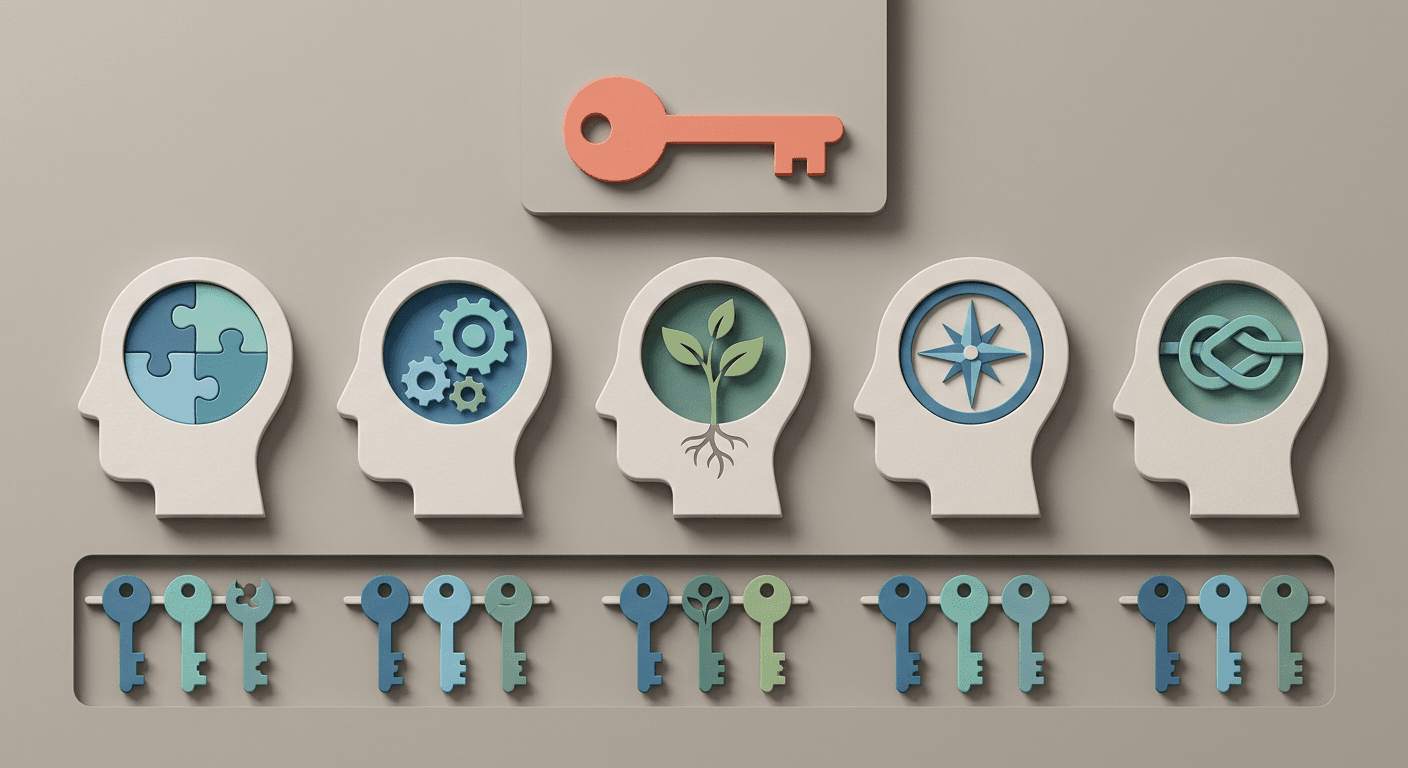
When people ask whether cannabis is harmful to mental health, they usually mean more specific questions than "Is it bad?"
They often mean:
- Will it make anxiety worse over time, even if it calms me down tonight?
- Could it push low mood into a depressive episode?
- If mental illness runs in my family, am I taking a bigger risk than I realize?
- Is there a real connection between cannabis and psychosis, or is that just stigma?
Science rarely answers those questions with a simple yes or no, because cannabis use is not one thing. It varies by THC strength, dose, frequency, age of first use, and individual vulnerability. Still, across large reviews, a consistent pattern appears, cannabis use is associated with worse outcomes for several mental health areas, especially when use is frequent, starts early, or involves higher THC exposure.
That does not mean every person who uses cannabis will develop a mental health problem. It means harm should be understood as a shift in probabilities, not a guarantee.
Core pattern
A practical way to hold the evidence is this:
Cannabis can bring short-term symptom relief, while at the population level it is linked to worse longer-term mental health trajectories.
A recent systematic review of mood disorders collected many cross-sectional and longitudinal studies. The overall pattern showed links between cannabis use and increased depressive and manic symptoms, higher chances of developing major depression or bipolar disorder, and poorer course of illness for people who already have mood disorders. Many studies rely on self-reported use and cannot remove all confounding, which makes the question nuanced rather than settled.
In short, the "harm" signal is not that cannabis instantly creates depression in everyone. The signal is that across many people and many studies, users, especially heavier or earlier users, tend to show more mood symptoms and worse outcomes over time.
Short-term vs long-term
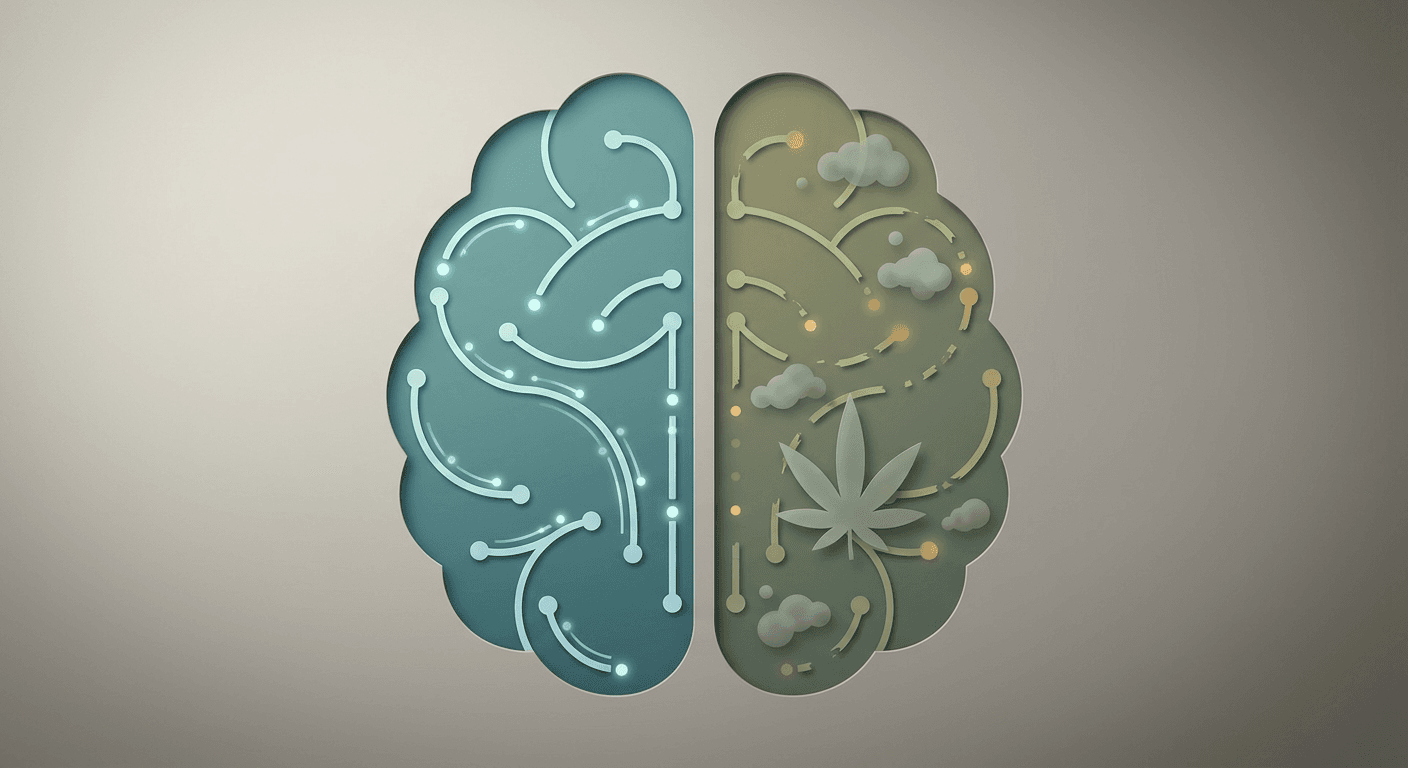
People often say, "It helps me," and they are not wrong. THC can acutely reduce distress for some people. It acts on the endocannabinoid system, a brain network of receptors and signaling molecules that helps regulate stress response, mood, sleep, and reward. When THC activates CB1 receptors, it can change how other neurotransmitters are released, which can blunt negative feelings and narrow attention away from worry.
The issue is what repeated strong stimulation does over time. The brain adapts to frequent THC exposure. CB1 receptors can become less responsive, and reward and stress systems recalibrate. This can look like:
- A flatter baseline mood when sober.
- More irritability or restlessness between uses.
- Sleep that becomes dependent on cannabis.
- Anxiety or discomfort that spikes as the drug wears off.
That pattern can create a feedback loop. Discomfort between uses increases the urge to use, which deepens the adaptation. This is why the same person can validly report both short-term relief and gradually worse anxiety or mood over years.
Depression risk
Cross-sectional studies show cannabis and mood symptoms move together. Longitudinal studies help address whether cannabis use tends to come before later depression outcomes.
Several cohort studies find that weekly or more frequent cannabis use in adolescence predicts a higher risk of later major depressive disorder. Cumulative years of weekly use have been associated with increases in depression symptoms. Some research also suggests an interaction with vulnerability, for example, cannabis initiation predicting worse depressive symptoms among girls who already had high symptoms at baseline.
These findings are not destiny. They do suggest a plausible direction of effect, especially for frequent use and for people who already experience low mood.
Anxiety and dose
Anxiety shows the clearest "two-faced" pattern. At lower doses, cannabis can relax people, reduce muscle tension, and help sleep. At higher doses, the same product can cause racing thoughts, rapid heartbeat, panic, paranoia, and a strong sense of threat.
This happens because THC can amplify salience, making sensations and thoughts feel more intense and important. In a safe setting, that intensity can feel pleasant. If someone is already stressed or prone to catastrophic thinking, the same amplification can trigger panic.
This is why product labels like "relaxing" can be misleading. The effect depends on dose, context, and individual vulnerability far more than on a marketing name.
Psychosis risk
There is credible evidence that cannabis exposure, particularly higher-THC products, frequent use, and early onset, is associated with increased risk of psychotic experiences and psychotic disorders in vulnerable people.
"Vulnerable" matters here. A family history of psychotic disorders, prior psychotic-like symptoms, and certain developmental windows appear to change the risk. The practical point is not to claim that cannabis is the single cause of schizophrenia. The practical point is that for some people, cannabis can be one ingredient that pushes a fragile system toward a loss of reality testing.
If you have had hallucinations, persistent delusional beliefs, intense paranoia beyond intoxication, or a close family history of psychosis, using cannabis is not a neutral experiment.
Risk modifiers
The research signal becomes clearer when we look at what changes exposure and sensitivity. Four modifiers stand out.
Age at first use
Adolescence is a period of rapid brain development, especially in circuits for emotion regulation, motivation, and executive function. Introducing a strong external modulator during that window appears to raise the odds of later problems, particularly when use is frequent.
Frequency and cumulative exposure
Many harms show a gradient. Occasional use is not the same as weekly or daily use. Several key findings are specifically about weekly or more frequent use and years of regular use, not one-off experimentation.
THC potency and product type
Higher THC generally means stronger acute effects and stronger adaptation pressure over time. Higher potency also increases the chance of acute panic, paranoia, and unpleasant intoxication, which can be psychologically scarring for some people.
Baseline mental health and family history
If you already have high depressive symptoms, high anxiety, trauma-related hyperarousal, or a family history of severe mental illness, cannabis is more likely to act like a destabilizer than a harmless relaxant. This is about starting conditions, not blame. The same exposure affects resilient and vulnerable systems differently.
What we do not know
Good reviews point out common limits. People who use cannabis differ from non-users in other ways that affect mental health, such as early adversity, other substance use, sleep patterns, and social environment. Many studies rely on self-report for cannabis exposure. Products and potency have changed quickly over the past decade, so older studies may not map perfectly onto today’s market.
Researchers call for better measurement of dose, frequency, and confounders. That is another way of saying, "We see a signal, but the measurement is messy."
So the honest conclusion is not "cannabis always harms mental health," and it is not "it is harmless because correlation is not causation." It is, the balance of evidence points to meaningful mental health risk for a non-trivial subset of users, and that risk rises with earlier, heavier, higher-THC use and with underlying vulnerability.
Assessing your risk
A simple mental model can help.
Cannabis is a nervous system modifier. The more often you modify, the more your baseline adapts. The younger the brain, the more plastic the adaptation. The more vulnerable the system, the larger the downside tail risk.
If you are using cannabis for mental health reasons, ask what it is doing to your baseline mood, sleep, and anxiety when you look at months rather than hours. Keeping a short log of mood, sleep, and use can make those longer arcs visible without turning the process into self-judgment.
If you have a history of psychotic symptoms or a close family history, treat that as a serious warning sign and consider discussing use with a clinician.
Bottom line
Cannabis can be harmful to mental health, but "harmful" usually appears as increased risk and worse trajectories rather than immediate, universal damage.
Across large reviews of mood outcomes, cannabis use is associated with more depressive and manic symptoms, higher likelihood of developing mood disorders, and poorer prognosis among people who already have them. Longitudinal work highlights frequent adolescent use and cumulative years of regular use as particularly relevant risk signals, and pre-existing symptoms can increase susceptibility.
To reduce risk, the highest-leverage steps are clear, delay use while young, avoid frequent use, avoid high-THC products, and take any history of psychosis or strong family history seriously.