
What are positive emotions
When people say "positive emotions" they often mean something general, like feeling good. In research, the term is usually more specific. It refers to short-lived states such as amusement, contentment, gratitude, interest, or quiet joy.
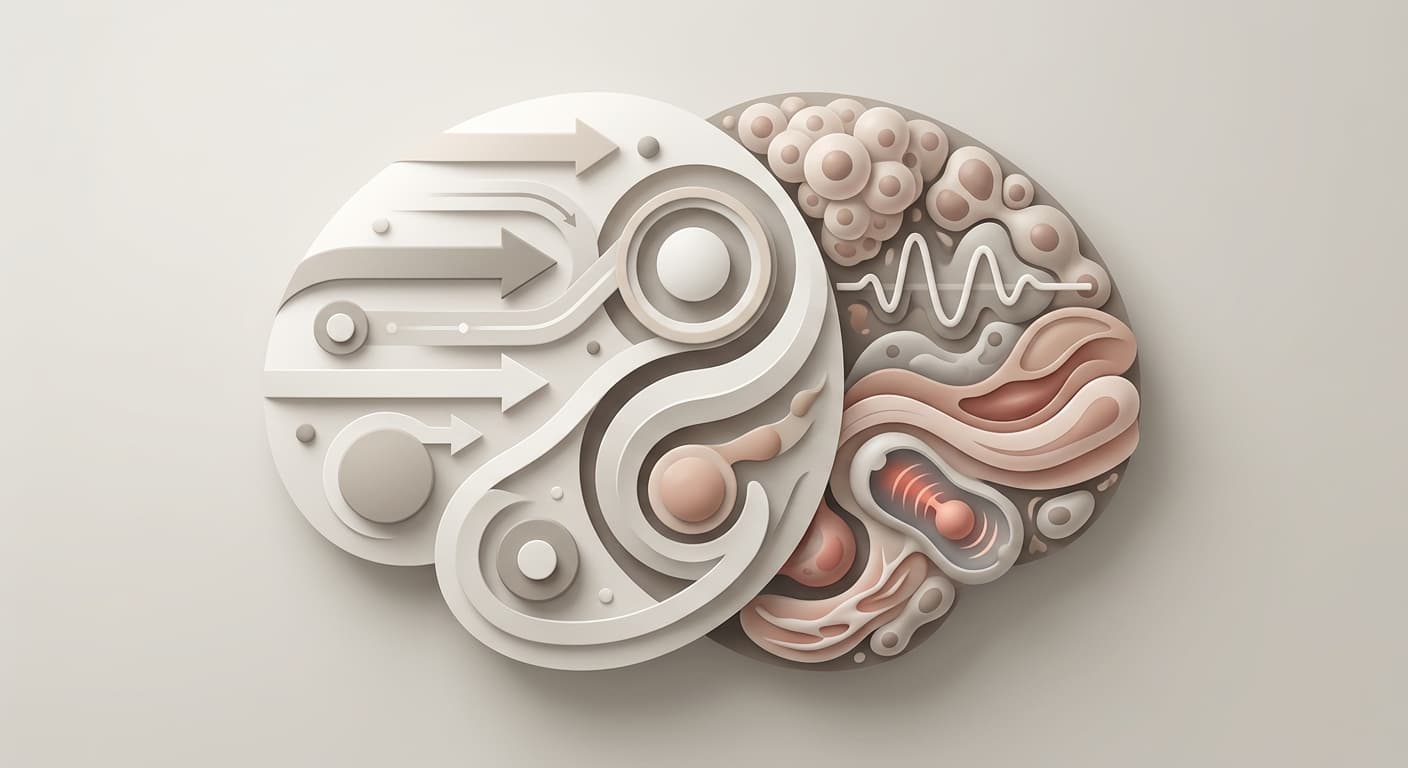
Those states matter because emotion is not just an outcome of thinking. Emotions also shape what your brain expects, what it pays attention to, and what it prepares you to do next. Since attention and expectation guide thinking, a change in emotional state can change the style of your cognition, even when the task itself stays the same.
The key question here is concrete: what changes in the mind, and by what mechanisms?
How they change thinking
Across many studies, three consistent effects appear.
- Positive emotions tend to broaden attention, widening what you notice.
- They can increase cognitive flexibility, making rule changes and perspective shifts easier.
- They help with stress recovery, allowing the body and mind to return to baseline more smoothly after activation.
Each effect has its own mechanism. They overlap, but they are not identical.
Broaden attention
One way to think about attention is as a filter that decides what is signal and what is noise. In threat states, narrowing that filter is often useful. If something seems dangerous, you want to focus on the most relevant cues and ignore the rest. That is why anxiety can make your world feel smaller.
Positive emotions tend to do the opposite. Classic broaden-and-build research shows that inducing positive emotion widens attentional scope and expands the set of "thought-action" ideas people consider. In everyday terms, you become more likely to notice options and connections that were previously outside your frame.
This is not mystical. It is a change in settings, one that you can feel in moments when a pleasant interaction makes a stuck problem seem less tunnel-like. The task did not change. The mind did.
Mechanism: safety cues
A simple mechanism chain looks like this:
- Positive emotion functions partly as a safety cue.
- When the brain infers safety, it relaxes strict filtering.
- Relaxed filtering increases the range of information processed.
- A wider input stream raises the chance of new combinations and actions.
This is not mystical. It is a change in settings, one that you can feel in moments when a pleasant interaction makes a stuck problem seem less tunnel-like. The task did not change. The mind did.
Limits of broadening
Broadened attention is not always beneficial. A wider attentional net can make you more distractible. If you need tight error checking, or if the environment is chaotic, broad attention can be a cost rather than a benefit. The point is not that positivity is always better, but that it shifts the tradeoff between focus and exploration.
Cognitive flexibility
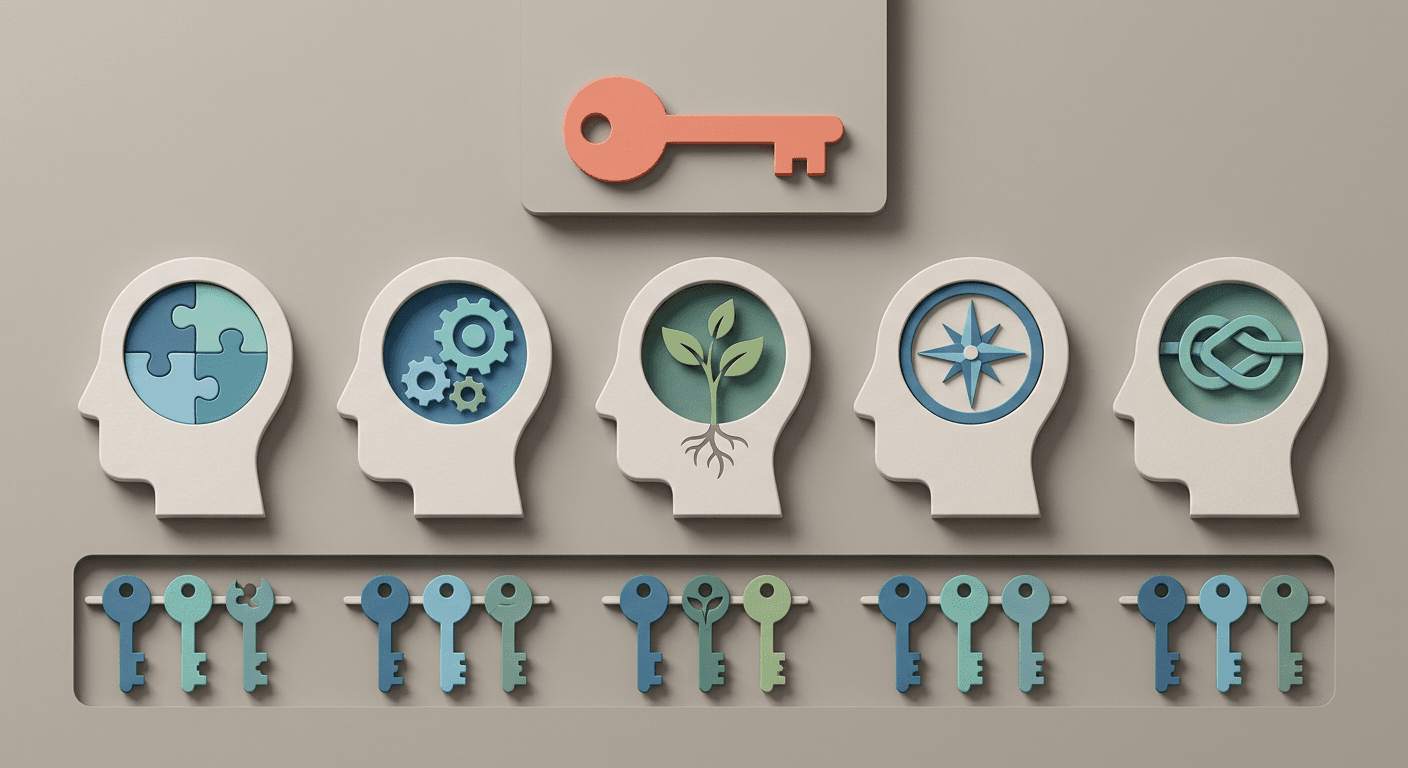
Cognitive flexibility is the capacity to stop following an old rule when it stops working. When the mind perseverates, you repeat the same strategy even if it fails. Flexibility lets you try something new.
Laboratory tasks that require switching between rules often show lower "switch costs" when people are in a positive mood. Neuroimaging work links that effect to reduced activation in brain regions involved in conflict monitoring, consistent with the idea that positive emotion smooths the process of changing mental sets.
Mechanism: reduced conflict
A concise chain for this effect is:
- Positive emotion shifts neurochemical and network dynamics in control systems.
- Conflict signals during switching are reduced or handled with less effort.
- Switching requires less top-down control, so the mind moves on faster.
This does not mean the brain stops monitoring for errors. It means the control system may not need to clamp down as hard to accomplish a shift.
Example: getting unstuck
Think about writing. When you are tense, you cling to the first sentence structure that appears, even when it is not working. A small uplift in mood can make it easier to discard that sentence and try a new angle. That lower cost of switching is cognitive flexibility in action.
Insight and creativity
Creativity covers many things. One clear slice that researchers study is insight, the sudden "aha" when a solution pops into view.
Studies show that people in positive affective states solve more problems by insight and display preparatory brain activity in regions associated with flexible control. A useful way to picture insight is as search. A broader attentional scope makes remote associations easier to sample, raising the chance of a discontinuous solution.
Mechanism: wider associative search
Positive emotion widens what gets admitted into working memory and which associations feel worth considering. That broadens the search space for ideas, increasing the probability that a remote but relevant association will be tried.
Dopamine and positivity
You will often hear "positive emotions release dopamine, so you think better." There is truth under that slogan, but the chemistry is not a simple cause-and-effect.
Dopamine is involved in learning, motivation, and flexible updating. Some theories propose that positive affect is associated with dopaminergic changes that promote flexibility and exploration. But different dopamine pathways do different things, and more dopamine is not always better. The honest takeaway is that positive affect is one route by which brain systems that support exploration can become more engaged. It is not a guarantee of improved decisions.
Beware of pop explanations that turn neurochemistry into a slogan. The science is conditional and context-dependent.
Stress recovery
Stress itself is not always harmful. The problem arises when stress activation persists and does not return to baseline.
Positive emotions appear to help "undo" some stress responses and speed recovery. In broaden-and-build terms, positive emotions reduce the wear-and-tear of prolonged activation and help build resources over time.
Mechanism: shift to recovery
A simple chain for recovery is:
- A stressor triggers protective physiology and threat-focused cognition.
- Positive emotion introduces an opposing signal, such as safety, connection, or completion.
- That shift favors recovery processes over prolonged activation.
- Faster recovery lowers baseline activation for future challenges.
This is not about denying or suppressing negative emotions. It is about how genuine positive moments can change the trajectory of recovery, giving the body and mind a different signal long enough to come down.
What they do not do
It is important to draw boundaries. Positive emotions do not make you rational by default. They can increase openness but also reduce critical vigilance in some contexts. A mild uplift might help perspective shifting, while an intense euphoric state can impair judgment.
These effects are often short-lived in lab studies. That does not make them irrelevant, but it does mean you should be skeptical of grand claims about permanent rewiring from a single mood boost.
Practical implications
If your goal is mental clarity, the useful takeaway is not "be positive." Treat positive emotion as a cognitive context that changes the mind's default settings.
Ask practical questions instead: when do I need narrow focus, and when do I need broad search? If you are debugging an error, narrowing might help. If you are stuck in a loop, broadening might help.
For prolonged stress, brief genuine positive moments can aid recovery, not by erasing the stressor, but by changing the system's signal long enough to come down. If you use a reflection tool like Mendro, notice how a positive moment links to a shift in thinking style. Use that observation as data about which states help you think more flexibly.
Calmer mental model
Positive emotions do not just add pleasantness to thinking. They change how thinking is configured.
They tend to broaden attention, expand the set of options your mind considers, reduce friction when switching rules, support insight by widening associative search, and help stress responses resolve more cleanly.
The science does not recommend chasing positivity at all costs. It suggests a more grounded approach: emotion is part of cognition's control panel, and positive emotions adjust the dials toward openness, exploration, and recovery. Understanding that lets you use emotional states strategically, not as a shortcut to better thinking, but as one tool among many for clearer mental work.