
When learning starts to feel different
Many adults can name the moment learning “changed.” A new language feels harder to pick up. A software workflow takes longer to become automatic. You can understand something in the moment, then feel it fade by the next day.
It’s tempting to explain that as “plasticity is gone.” But neuroscience paints a more accurate (and more hopeful) picture:
- Plasticity continues across the lifespan, including in older age.
- The conditions for change shift, what triggers plasticity, how quickly it settles in, and how easily it gets disrupted.
- Adults often learn by reorganizing and reweighting networks, and by leaning on strategy, rather than relying on the fast, high-gain plasticity that’s more common in childhood.
In other words: adult brains still change. They just don’t always change automatically.
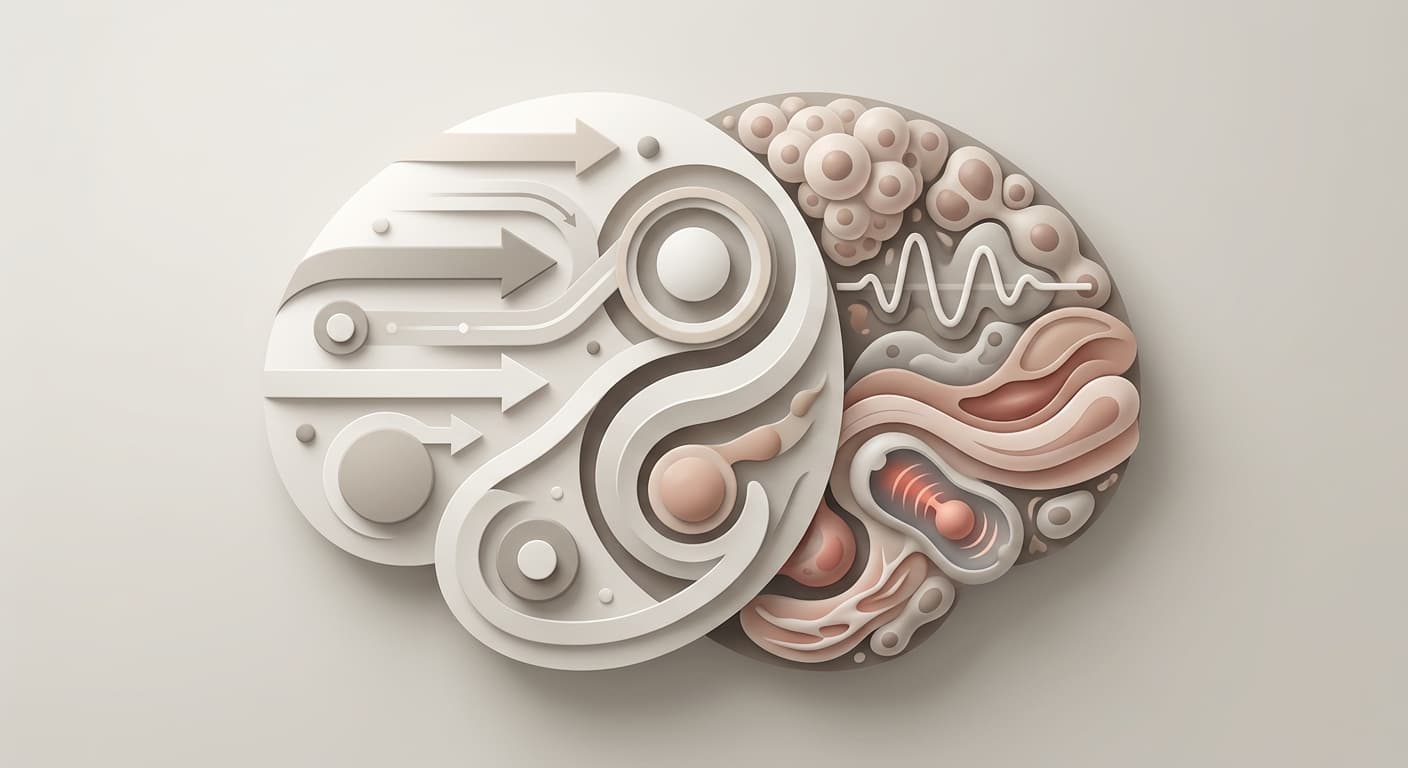
Neuroplasticity: a real set of mechanisms, not a slogan
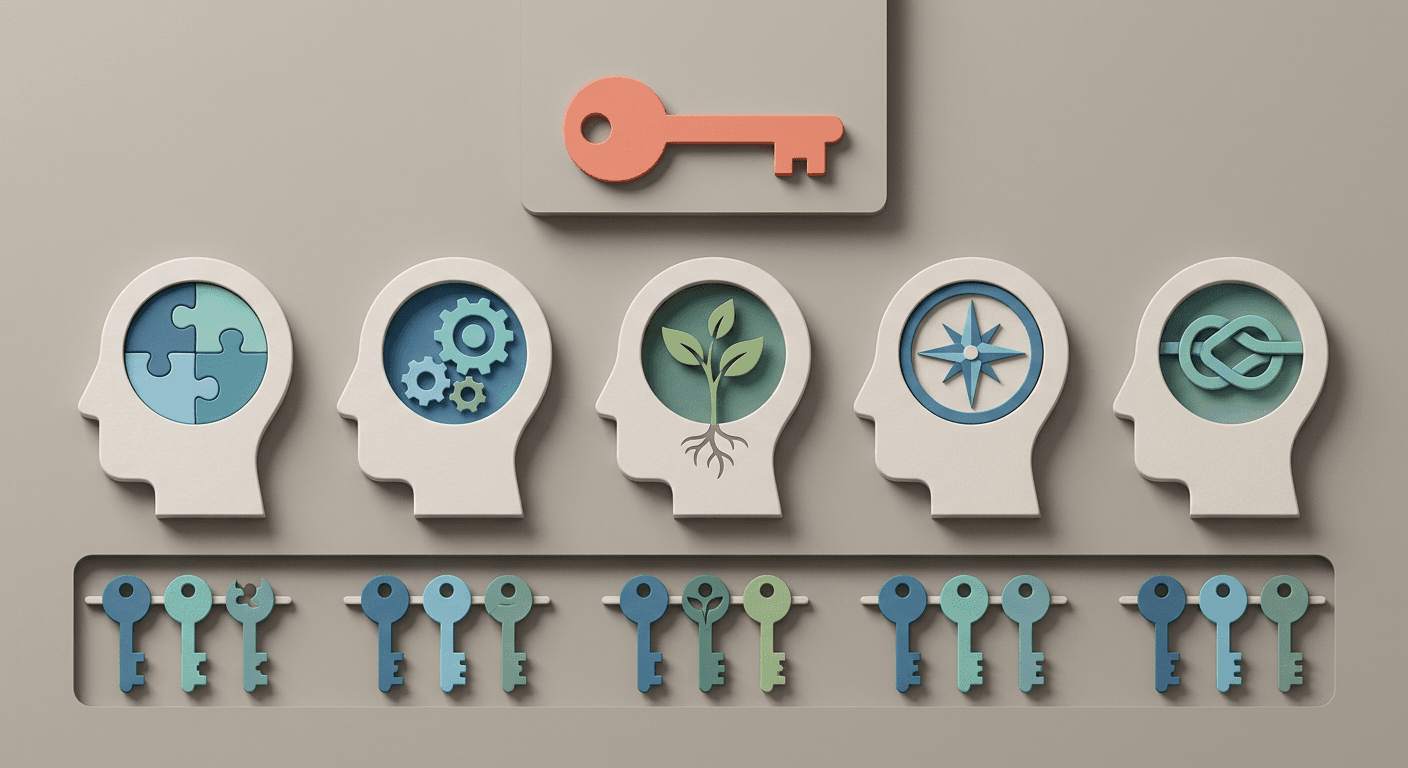
“Neuroplasticity” isn’t one thing. It’s a bundle of processes that help the brain adjust to experience. For learning, the most relevant ones include:
- Synaptic plasticity: synapses strengthen or weaken with activity (often described as LTP/LTD).
- Structural plasticity: dendritic spines form, retract, and stabilize; myelin can also adapt with practice.
- Network-level plasticity: the brain changes which regions cooperate and how strongly they coordinate.
- Neuromodulatory control: chemicals like dopamine, acetylcholine, and norepinephrine influence whether an experience gets tagged as “important enough to store.”
A useful way to think about adult learning: it’s not only repetition that matters. It’s whether the brain registers practice as salient, safe, and worth consolidating.
What changes with age (and how it shows up in learning)
Aging doesn’t flip plasticity "off". Instead, several systems gradually shift. Each change is subtle on its own, but together they can make learning feel different.
1) Some forms of plasticity are harder to trigger
Many lab models of learning rely on LTP-like mechanisms. With age, these changes can become less reliably induced, especially in circuits important for memory.
What that can feel like:
- You may need more repetitions before a new skill feels stable.
- Learning can be more sensitive to inconsistent practice, those “almost right” reps don’t lock in as easily.
This doesn’t mean adults can’t build durable memory. It means the threshold for durable change can be higher.
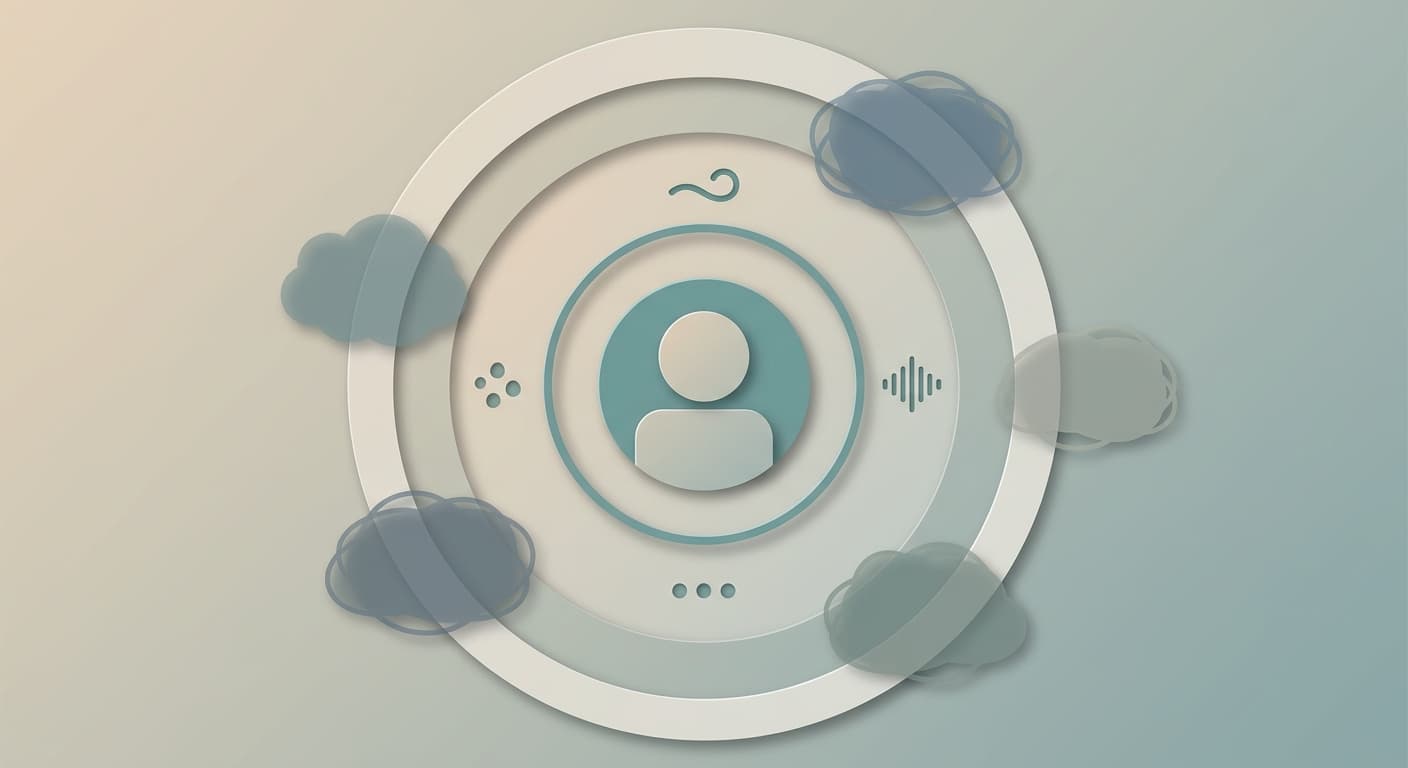
2) The brain’s “signal-to-noise” can get worse
With age, a mix of factors can increase biological “noise”, including:
- low-grade inflammation
- oxidative stress
- vascular and metabolic changes
- less efficient cellular repair and cleanup
The learning implication, it can become harder for the brain to separate the important learning signal from background activity, especially when you’re tired, underslept, or stressed.
3) The balance between flexibility and stability shifts
Plasticity depends on a careful balance, enough excitation to drive change, enough inhibition to keep things stable and prevent runaway activity.
With age, that balance can tilt toward protection and stability. The brain may become:
- more cautious about changing
- more dependent on attention and context to “open” a learning window
That helps explain why adult learning can feel state-dependent: some days it clicks, other days it feels weirdly resistant.
4) Structural changes shape the style of learning
Aging is associated with changes in:
- dendritic spines (key structures for synaptic adaptation)
- white matter integrity and myelination patterns
- coordination between hippocampus and prefrontal systems involved in memory and control
The result isn’t “learning stops.” More often, learning becomes more:
- strategy-driven
- contextual
- integrated with prior knowledge, rather than pure “raw absorption”
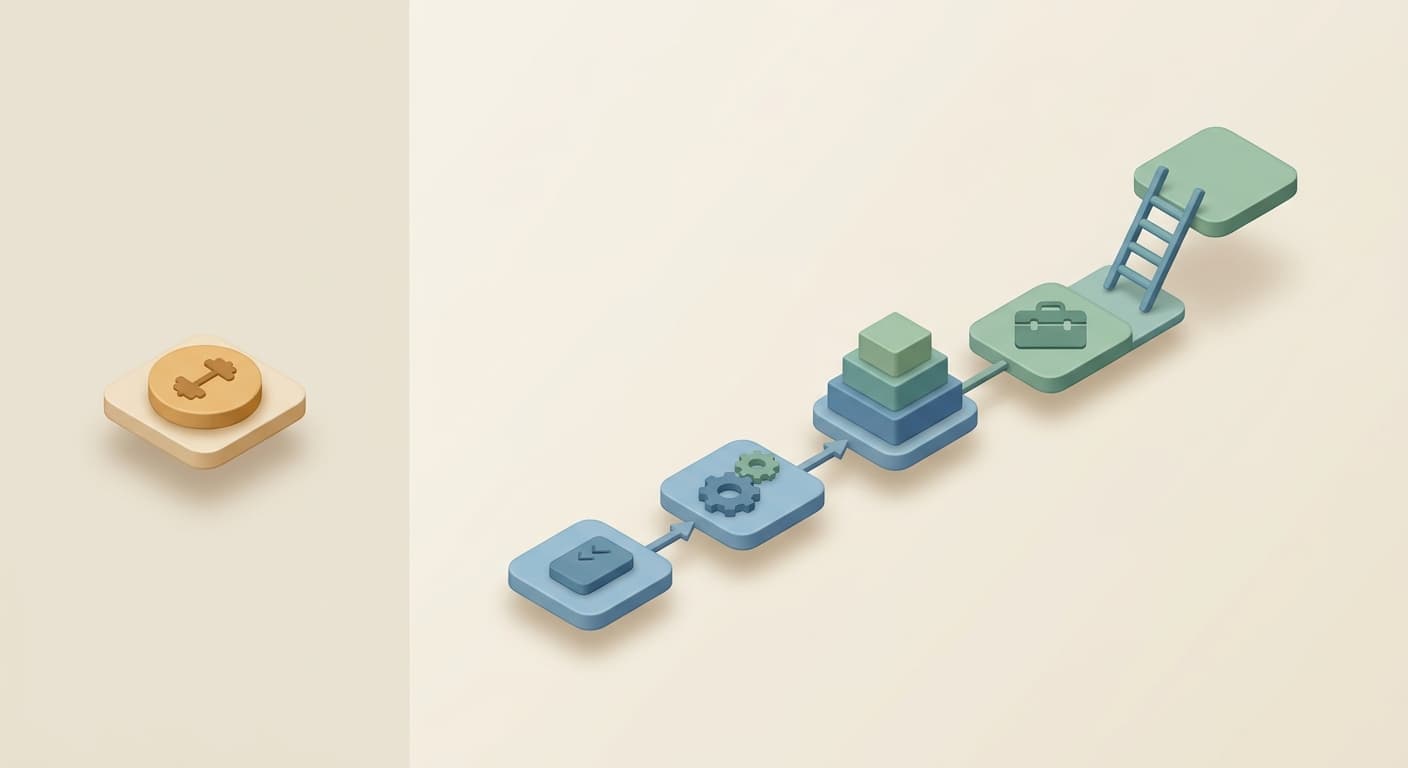
5) Adults often recruit different networks to get the job done
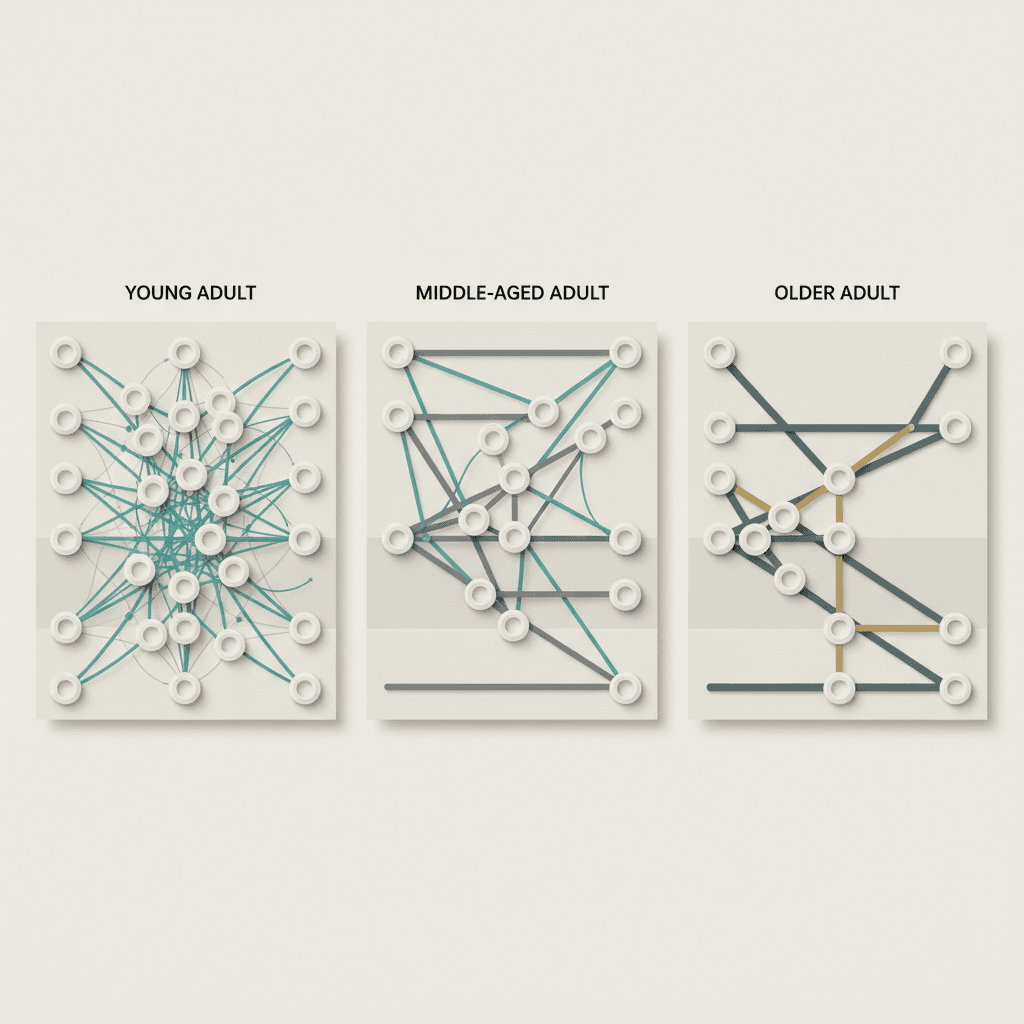
A consistent finding in cognitive aging research is that older adults may show different activation patterns while performing similarly to younger adults. That’s not “fake performance”, it’s the brain solving the task with a different configuration.
In practice, adults may rely more on:
- planning and structure (prefrontal control)
- meaning and semantic knowledge networks
- external cues and routines that reduce cognitive load
What studies tend to show at different ages
Researchers often group participants by broad age ranges. These are general patterns (not rules) that show up across many studies.
Young adulthood (roughly 18, 30)
- Faster learning curves on many novel tasks.
- Bigger “single-session” gains are more common.
- Learning can sometimes still happen under imperfect conditions (stress, short sleep), though usually with a cost.
Midlife (roughly 40, 60)
- Learning remains strong, but becomes more variable across people.
- Sleep, stress, and health factors (metabolic, cardiovascular) explain more of the differences in learning outcomes.
- Skill building often improves when it’s tied to goals, meaning, and existing expertise.
Older adulthood (roughly 65+)
- Many abilities remain trainable, but “near transfer” (improving closely related skills) is more reliable than “far transfer” (broad improvements across unrelated domains).
- Gains often show up as better strategies, better efficiency, and better real-world function rather than a return to youthful processing speed.
- More repetition and more time for consolidation may be needed for the same stability.
Across major reviews of cognitive training and plasticity in aging, the consistent theme is: older adults do show plasticity, but it’s often more constrained and more varied person-to-person, depending on what’s trained, for how long, and with what supports.
How learning performance tends to shift (the “what you notice” version)
Alongside biology, there are common behavioral shifts many adults recognize:
- Slower early progress when the material is brand-new and arbitrary (especially under time pressure).
- Slower processing speed and slower “in-the-moment” updating in working memory for many people (with wide individual differences).
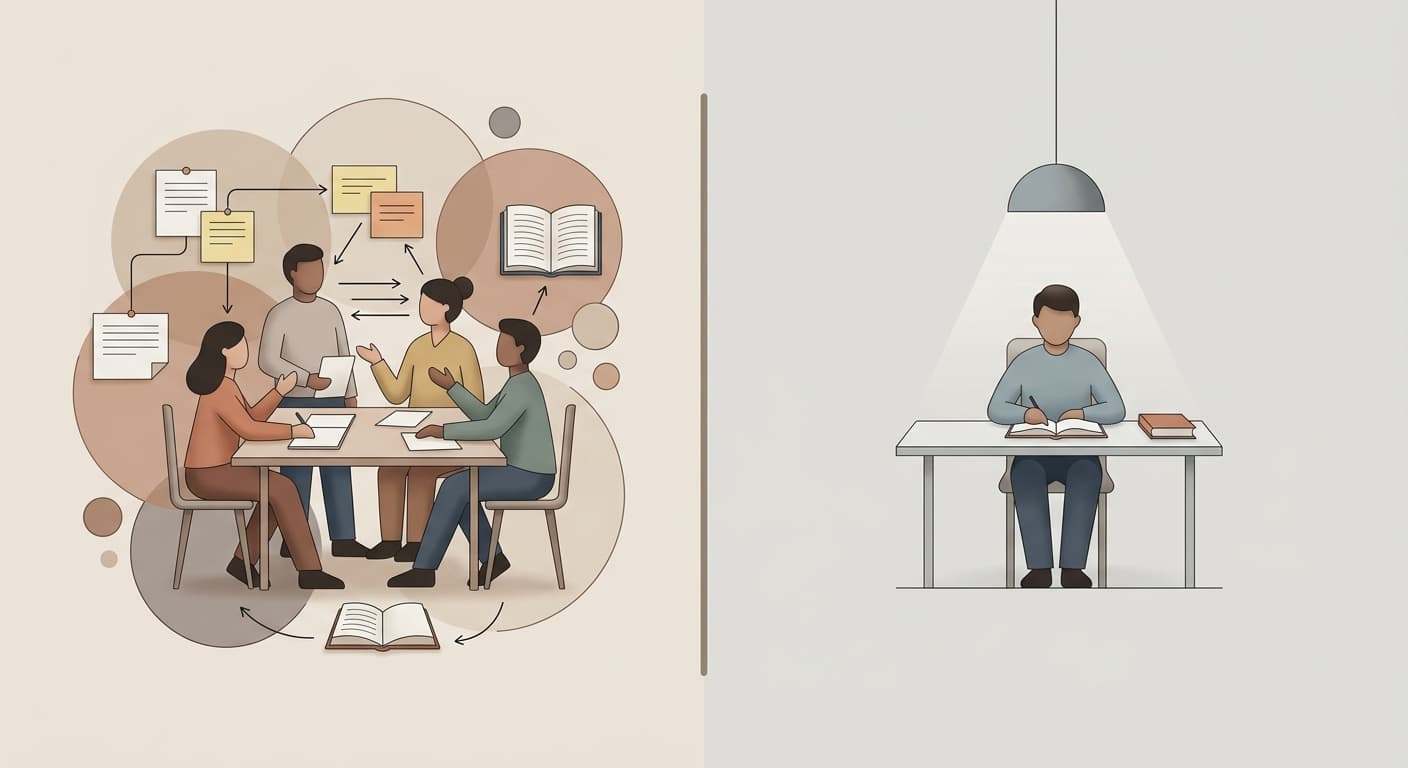
- More reliance on meaning and context: learning sticks better when it connects to a purpose, story, or existing knowledge.
- More benefit from consolidation: spacing and sleep matter more because stabilization is less automatic.
So when adults say, “I can learn, but it takes more passes,” that often matches what research suggests: the brain is prioritizing stability and asking for a clearer, more consistent learning signal.
A calmer interpretation: stability vs. flexibility
People often summarize aging as “less plastic,” but a more useful frame is more stability-oriented.
That stability has real advantages:
- accumulated expertise
- stronger semantic networks (knowledge and meaning)
- better judgment in familiar domains
The tradeoff is that rapid rewiring, new phonemes in a language, brand-new motor sequences, unfamiliar abstractions, may require:
- clearer salience
- more consistent reinforcement
- more recovery and consolidation cycles
Why self-reflection matters (the Mendro angle, without over-promising)
Because adult learning is more sensitive to internal state, one of the highest-leverage moves often isn’t “try harder,” but “notice the conditions that make learning stick.”
A reflection practice (like Mendro) can help you spot patterns such as:
- “I encode new material best after 7+ hours of sleep.”
- “My recall drops when I stack similar topics back-to-back.”
- “Short sessions across several days work better for me than one long push.”
That’s not motivational fluff. It’s a practical match for a brain that still adapts, but increasingly depends on the right context to open and stabilize plasticity.
The takeaway
Neuroplasticity doesn’t disappear with age. It changes shape.
- Some fast, high-gain mechanisms become harder to trigger.
- Noise and state factors matter more.
- The brain leans more on compensation, meaning, and strategy.
- Real learning remains possible even in older adulthood, but it often needs clearer signals and more time to consolidate.
You may not learn the way you did at 20, but you can still learn a lot, especially when learning is designed around how adult plasticity actually works.