
Habits shape your life
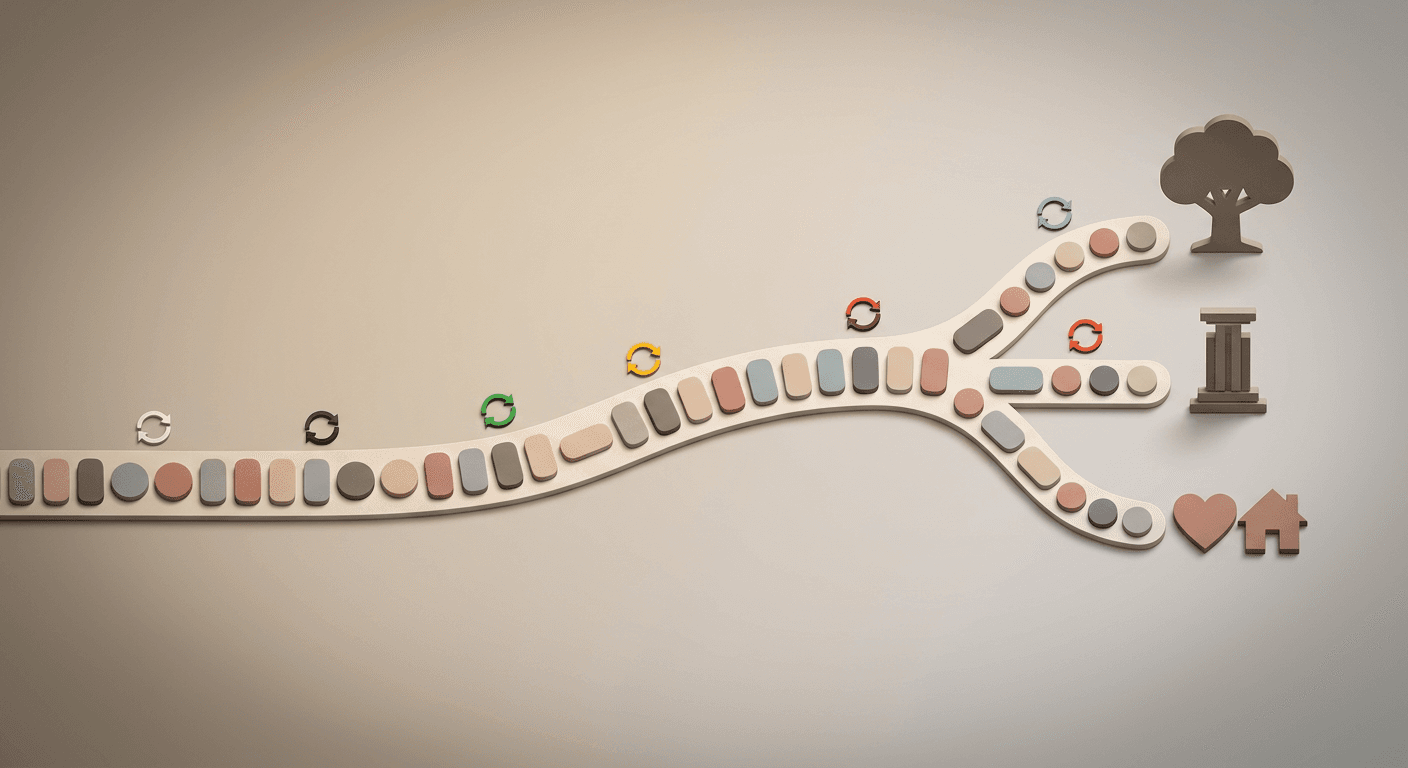
When you explain why a day went a certain way, you naturally point to plans, intentions, or priorities. That is part of the story, but not all of it. Much of daily life runs on repetition. Habits are the behaviors your brain starts running automatically in familiar contexts. Because they repeat so often, they quietly shape your days more than most big decisions do.
A habit is a behavior that becomes more automatic over time. Automatic means it happens with less conscious decision making. You still do it, but you do not have to argue with yourself each time. That shift matters because the everyday choices that add up are often small defaults you rehearse, not dramatic single acts of will.
How habits form
A useful way to understand habits is to look at what must line up repeatedly for one to form. Three things tend to appear together:
- A stable cue, like a time of day, a place, a mood, or a preceding action.
- A repeated behavior you perform in that context.
- A payoff, even a small one, such as relief, pleasure, comfort, or the sense of being done.
When a cue reliably predicts a payoff through repeated behavior, the brain begins to treat the cue as a signal. The cue triggers the behavior as the expected next step. Over time the action feels like "what you normally do" in that situation. This explains why habits are often sticky in the exact place they were built, change the environment and the pattern can change quickly, put someone back in the original context and the old loop often returns.
Why the brain prefers habits
The brain is constantly budgeting attention. Holding goals in mind, comparing options, resisting impulses, and choosing intentionally all use effort. Habits turn repeated decisions into streamlined sequences, saving that effort for situations that actually need conscious thought.
Think of a habit as a shortcut for mental energy. That shortcut can be useful. In moments of stress or uncertainty, familiar routines give the nervous system a pocket of predictability. The routine might be healthy, like taking a walk, or it might be a coping pattern such as scrolling to unwind. The brain is not evaluating morality, it is managing state and efficiency.
This is also why habits can feel comforting but hard to change. If a behavior requires high effort every time, it will break down when energy is low. Low-friction actions are easier to keep consistent.
How habits shape days
Habits influence daily life in several overlapping ways.
They determine what you actually do more reliably than intentions do. You can value sleep and still have a "one more episode" habit at bedtime. You can care about health and still skip meals out of a routine.
They shape identity. Repeated actions become evidence about who you are. If you journal most mornings, you start to see yourself as someone who reflects. If you repeatedly avoid difficult conversations, you may come to believe you are conflict-averse, even though the pattern is what created that sense.
They change what feels normal. After enough repetitions, a habit stops feeling like a choice and becomes a baseline expectation for your nervous system. That is why changing habits can feel disorienting, you are changing both behavior and what your body expects.
Health and habits
Long-run health is mostly an accumulation story. Sleep, diet, movement, alcohol use, stress coping, and social connection are rarely decided by single events. They emerge from patterns.
That means the right question for reflection is not only "Was today healthy?" but "What did today rehearse?" A single unhealthy meal is not usually the issue, but a stable pattern that consistently defaults in one direction becomes the outcome.
Simple, low-friction habits often outperform ambitious plans because they are easier to repeat. Drinking water from a bottle you keep nearby is straightforward. Structured exercise often needs planning, time, and discomfort tolerance, so it is more vulnerable to context changes and low-energy days. This is a practical design constraint, not a moral failure.
Habits and intentions
Habits and intentions are not opposite categories. They can coexist and support each other. When you intentionally repeat a behavior in a stable context, that behavior can become automatic and take some of the burden off deliberate effort. In that case the habit supports your intention by making the wanted action the default.
The opposite also happens. You may intend to change and still find old cue-driven patterns pulling you back. That feels like inconsistency, but it is often two systems running in parallel, a deliberate goal and an automatic cue-response. Recognizing both systems makes change easier to plan.
Notice your habits
If you want to see habits clearly, start by locating them rather than judging them.
Pick one recurring behavior you are curious about, something small and frequent, and ask:
What is the cue? What happens right before it, in the environment or in me? What is the payoff? What state does it create, even briefly?
For example, you might reach for your phone after sitting on the couch. The cue could be the couch, a transition moment, or a particular feeling. The payoff might be brief relief, distraction, or novelty. Labeling the behavior "bad" misses the function it serves. Once you understand the function, you can look for alternatives that meet the same need with fewer costs.
A simple habit-friendly prompt is: What reliably triggers this, and what does it give me? Using Mendro can help you identify these cues and payoffs by making the pattern visible through quick, consistent self-reflection check-ins.
Limits of this view
Not everything that repeats is a habit. Some behaviors repeat because of external constraints such as work schedules, caregiving responsibilities, financial limits, health, or unsafe environments. Calling those patterns "habits" can wrongly imply personal blame.
Automaticity varies too. Many actions are partly deliberate and partly automatic depending on stress, sleep, social context, and how stable the environment is. The goal is not to explain your whole life through habit language but to notice where automation is doing the work. Those are the places where small changes can have outsized effects.
Quiet conclusion
Habits influence your life because they are the behaviors you perform with the least friction. They shape moments you do not narrate, reduce cognitive load, and repeat whatever pattern they encode, helpful or harmful. Over time, patterns become outcomes.
A practical place to begin is simple: identify the cues that reliably precede a behavior. Habits can look like personality until you see their triggers. Once they look like patterns, they become something you can work with.