
Why Your Actions Influence Others
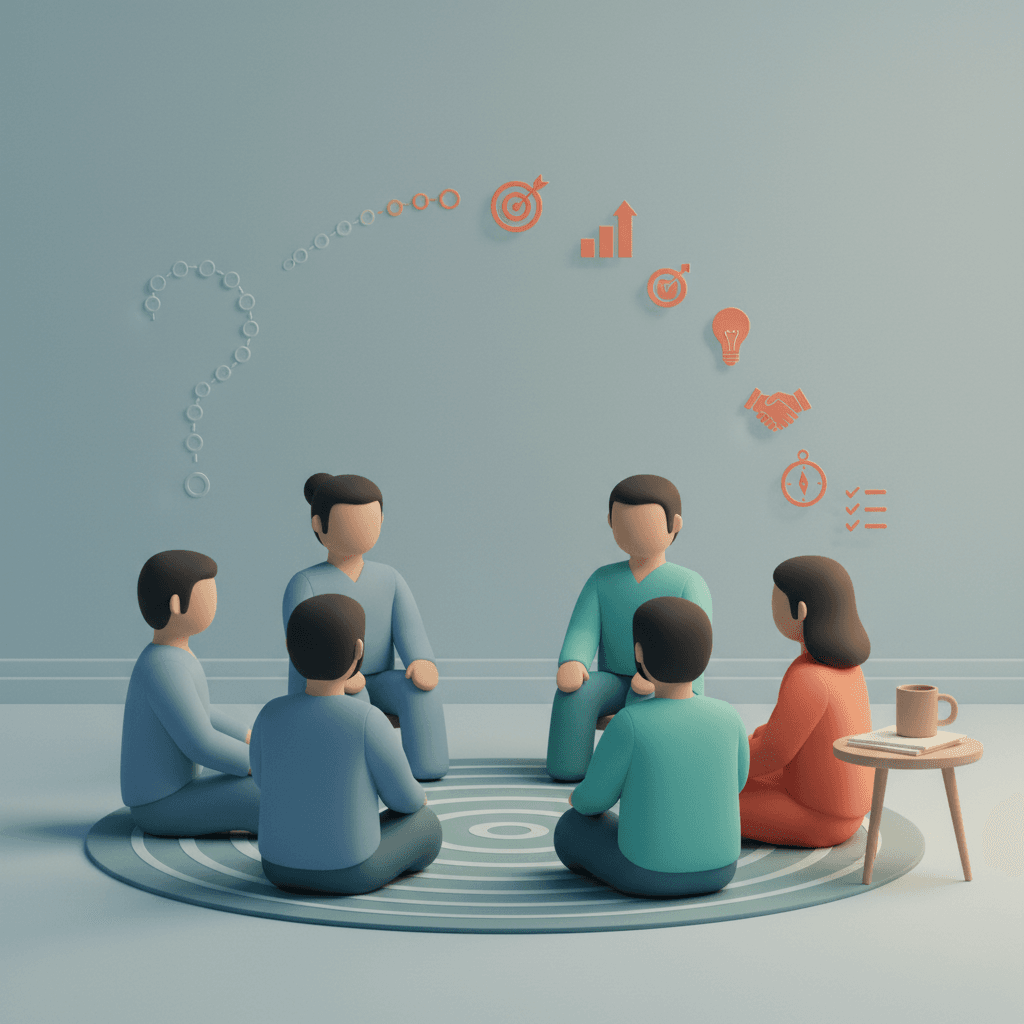
Picture a familiar moment: you join a video call a minute early. Cameras are off, people are muted, the chat is quiet.
Then one person turns their camera on, smiles, and says, “Hey everyone.” Two more cameras come on. Someone else speaks. The meeting now has a different tone.
Nothing about that first action forced anyone. But it changed what others could safely assume was normal. In social life, behavior is information.
Behavior Is Data (Even When You Don’t Mean It To)
Most of the time people can’t see your private reasons—your values, your confidence, your intentions. They see what you do, what you avoid, what you repeat, and what you reward.
From there, the brain uses a practical shortcut:
- observe an action
- infer what it signals (safe, rewarded, normal, approved)
- adjust behavior to fit what seems to work in that setting
This isn’t always “peer pressure.” Often it’s learning. In a new team, an unfamiliar culture, or a stressful moment, copying what others do reduces risk and mental effort because you don’t have to guess the rules from scratch.
That’s also why influence is strongest when people feel unsure.
The 4 Main Ways Actions Spread Through Groups
When people say “behavior spreads,” they’re usually describing multiple processes that can overlap. These are the most common ones.
1) Social Proof: “This Must Be Normal Here”
We track descriptive norms—the pattern of what people actually do.
- If the shared kitchen is tidy and everyone washes their mug, washing yours feels like the default.
- If sinks are full, leaving your mug starts to feel normal too.
In field experiments in hotels, simply highlighting what most guests do can increase towel reuse, especially when the message is framed as “people in this room” rather than “people in this hotel,” because the reference group feels more relevant.
2) Approval Signals: “This Is What We Respect”
Researchers call these injunctive norms, which is a technical way of saying: the signals a group sends about what it likes and dislikes.
Those signals can be:
- explicit (a rule, a comment, a correction)
- subtle (a look, a laugh, who gets praised)
Importantly, injunctive norms can conflict with descriptive norms. A parking lot might be full of litter (so it looks like littering is common), while a sign, or visible disgust, signals that littering isn’t respected.
In moments like that, people tend to follow whichever norm is most noticeable.
3) Prosocial Contagion: “Helping Makes Helping More Likely”
A third pathway is prosocial contagion: seeing someone help increases the chance you’ll help later, even if you help in a different way or toward a different person.
Across research reviews, the average effect is reliably positive, but it varies by context.
Often people don’t copy the exact behavior—they copy the underlying goal: “This is a place where helping matters.” You might see someone welcome a new coworker, and later you offer help on a project instead.
Some researchers call this goal contagion: the motivation spreads more than the specific action.
4) Conformity Pressure: “This Is What’s Safe”
A fourth pathway is conformity pressure. When a group appears unanimous, people may shift what they say or do because:
- they assume the group knows something they don’t, or
- disagreeing has a social cost
In everyday life this looks like nobody challenging a flawed plan, or a new hire mirroring a cynical tone to avoid standing out.
Here, influence isn’t about learning what’s true, it’s about learning what’s safe.
Why Influence Sometimes Fizzles Instead of Spreading
Across studies, prosocial modeling is real on average, but the size of the effect varies. That variability isn’t a flaw, it’s part of the story.
Here are common reasons influence doesn’t “rub off.”
The Meaning Is Ambiguous
If a helpful act can be interpreted as self-interested, it’s less likely to activate a “helping matters here” goal.
The Action Isn’t Visible (or Isn’t Repeated)
Behind-the-scenes effort matters, but it rarely shapes group norms unless it becomes:
- noticeable
- repeated
- explicitly named
Competing Norms Cancel Each Other Out
If descriptive norms (what people do) and injunctive norms (what people approve of) conflict, people often follow whichever is more salient in the moment—especially under time pressure.
That’s how a workplace can sincerely claim to value candor while the lived pattern is silence.
The Cost of Deviating Is Too High
Sometimes the barrier is simply risk. If deviating feels dangerous, people conform even when they disagree.
A single sarcastic remark from a high-status person can make cynicism feel like the safest option because it teaches the group what gets rewarded.
A Practical Takeaway (Without Performing for Others)
The takeaway isn’t “perform goodness so people copy you,” because that often reads as performative.
A calmer, more realistic takeaway is this: in groups, you are always broadcasting information about what is normal, rewarded, and safe. That broadcast happens whether you intend it or not.
And if you have seniority, status, or confidence, people weigh your behavior even more heavily, because it looks like a clue to the real rules.
The Bottom Line
There’s nothing mystical about influence. It’s a set of ordinary learning processes tuned for social life.
People watch what you do to figure out:
- what works here
- what is allowed
- what gets rewarded
- what kind of behavior is expected
Seen this way, the “tone” of a team, family, or friend group becomes less a vague vibe and more a pattern of visible behaviors that teach others what to do next.