
Small but meaningful
Most people do not need another command to feel grateful. They need to know why a gratitude habit would actually change anything, especially on hard days.
The Three Good Things practice is simple: once a day, write down three things that went well. Sometimes you add a short note about why they went well.
On the surface it looks like a pleasant ritual. Underneath, it is an attention and memory exercise. You are training what your mind searches for and what it stores at the end of the day.
That matters because your brain does not record experience evenly. It samples.
Sampling problem
A useful way to think about mood is that it is partly shaped by what your mind repeatedly brings to awareness.
If attention is mostly pulled toward problems, threats, failures, and unfinished tasks, those items become the evidence your brain uses to answer a quiet background question, How is life going?
This is where memory bias becomes practical.
Memory bias explained
Memory bias means you remember some kinds of information more easily than others. When you are stressed, tired, or burned out, the mind often stores and retrieves negative material more readily. This is not a moral failing. It is a survival feature, remembering threats helps avoid them later.
The problem is modern life can turn that feature into a chronic posture. Your mind keeps collecting "what is wrong" data, and then it feels true that everything is wrong.
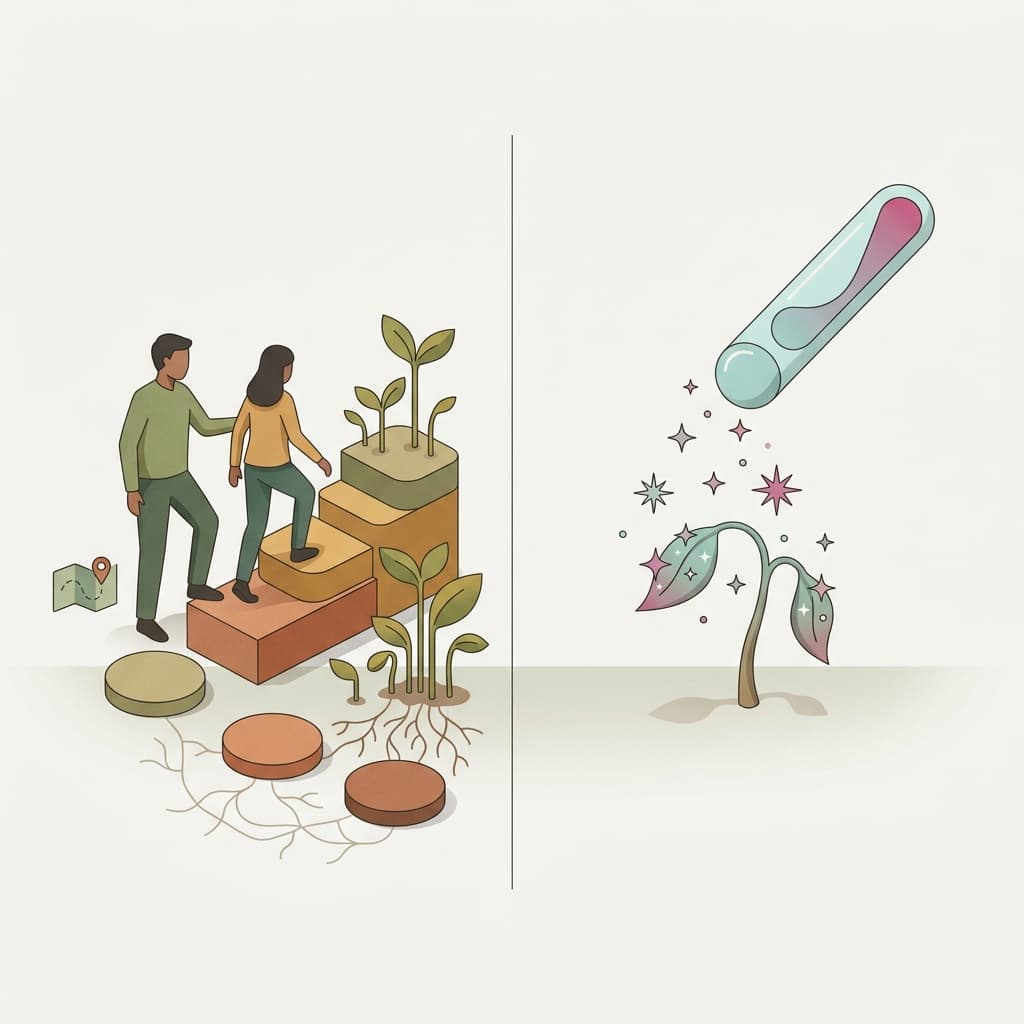
Three Good Things does not deny negative data. It forces additional sampling. It asks your attention to notice what also went right.
Why writing helps
You can do this exercise mentally, but writing changes how the brain processes the moments.
When you write, you slow down enough to notice specifics, turn vague impressions into clear statements, and create a record you can revisit. Those three changes matter because thoughts are slippery. They appear, feel true, then vanish. Writing pins them down, which strengthens memory encoding.
Encoding explained
Encoding is the process of converting an experience into a memory you can later retrieve. Many positive moments at the end of a day are only lightly encoded: they happened and then they were crowded out by louder events.
Writing three good things gives those moments additional processing. In memory terms, you are giving them a second pass. What gets a second pass is more likely to stick.
Attention steering
A common misunderstanding is that Three Good Things is about optimism. It is more accurate to say it trains attention.
When you practice each evening, you create a cue, scan the day for what went well. Over time that cue often starts operating earlier. People report noticing small good moments during the day because they know they will write later. That is not magical thinking. That is attentional systems adapting to a repeated goal.
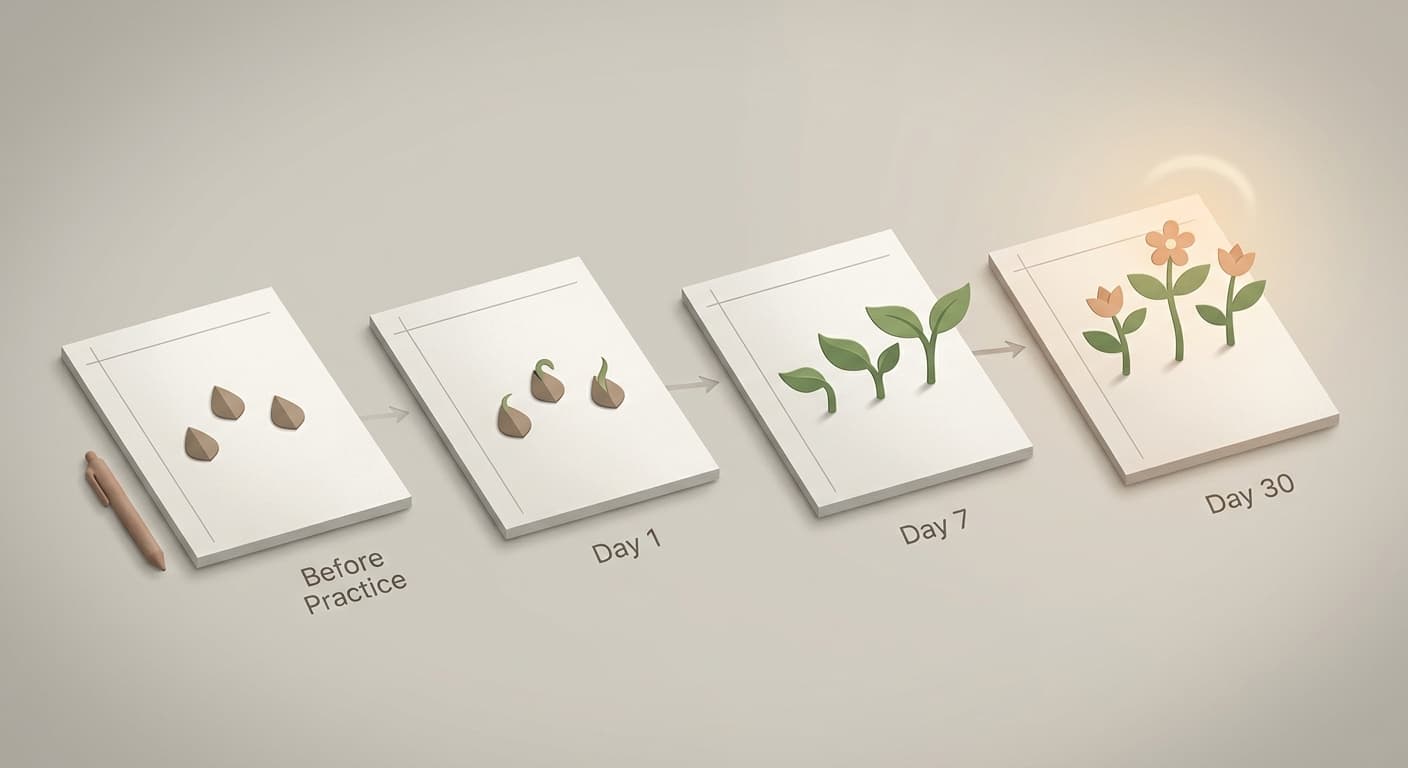
After a week or so you are not only recording life, you are changing what you look for.
What research shows
The evidence base is not perfect, but it is stronger than a feel-good idea.
Trials and outcomes
Early randomized trials in positive psychology found that people who wrote three good things daily for about a week reported higher happiness and lower depressive symptoms in the months that followed, compared with control groups. More recent trials, including a digital version for health care workers, found reductions in burnout and depressive symptoms after a short daily practice, with effects that persisted at follow-up for some participants.
The key point is not that this practice cures depression or burnout. The point is that a brief, structured reflection can shift measurable well-being outcomes in controlled studies, at least for some groups.
Limits and gaps
We should also name what is less clear. There are fewer large, diverse trials than we would like. Many studies focus on specific populations, or on short intervention windows, so questions remain about how much benefit comes from novelty versus a sustained habit. The honest scientific stance is moderate evidence for short-term benefits, with promising but not definitive long-term data.
Not forced positivity
If you tried gratitude exercises and bounced off them, the usual problem is emotional invalidation.
If the practice becomes, I must feel grateful, you create a second problem, now you are failing at being positive. Three Good Things works best when entries are factual, not performative.
A "good thing" can be a small relief rather than joy, a friction reduced, a choice that aligned with your values, or a connection that softened the day a bit. Framing it this way keeps the practice anchored in reality. You are not pretending the day was great. You are balancing the record.
How to practice
The simplest useful version is also the easiest to sustain: write three good things each evening.
If you want the mechanism to engage more strongly, add a one-sentence why. When you note why something went well, you do attribution training. You tell your brain what caused a good outcome.
Compare these entries:
- Had a nice walk.
- Had a nice walk because I put my shoes by the door and texted a friend to meet me.
The second entry contains levers for repetition. It is not just gratitude, it is learning.
Add the why
Noting reasons helps you see patterns and repeatable actions. That makes the practice practical, not mystical.
Keep it small
The habit works through repetition, not intensity. Two minutes a day you actually do beats a beautiful journal you abandon. If you miss a day, restart the next evening. The mechanism is cumulative.
When it helps less
There are situations where the practice will feel flat or irritating. It is less helpful when you are in acute crisis and your nervous system is in survival mode, when you use it to argue with your own feelings, or when entries are vague and disconnected from lived moments.
In those cases try redefining "good" as supportive, steadying, or simply less bad. You can also pair the practice with a grounding routine, like a brief body-based calm-down, before you write.
The point
Three Good Things is not about convincing yourself life is good. It is about correcting sampling bias.
When you write three good things each day, you build a small, repeatable habit of evidence collection. You tell your attention to notice things that went well and your memory to store them. Over time that changes what your brain retrieves on a random Tuesday when you ask, How am I doing lately?
That is why the practice helps. Not because it makes life perfect, but because it makes your inner record more complete.
Where to do it
Some people use a notebook, others use a reflection tool like Mendro. The medium matters less than keeping the entries specific and doing them consistently.