
Why the question is wrong
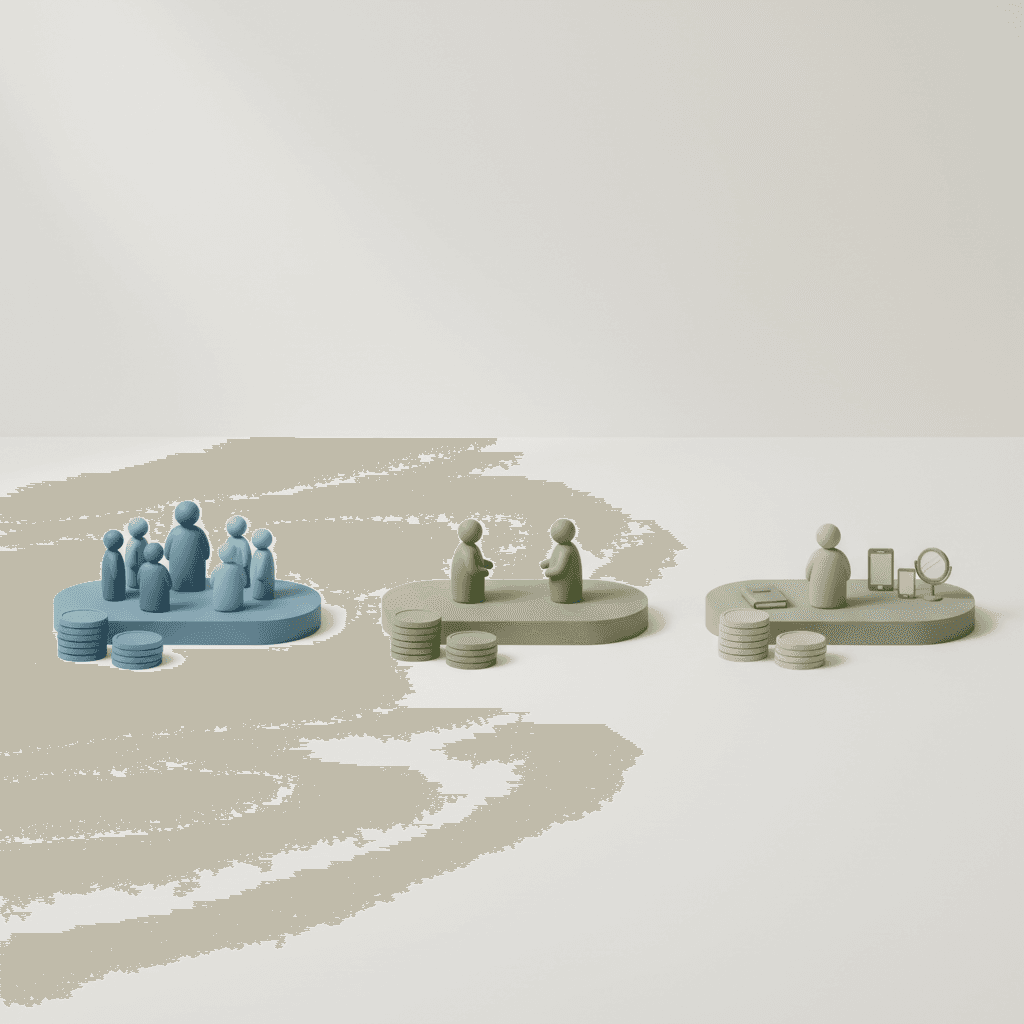
When people ask "What are the best exercises for fat loss, knee pain, glutes, posture, a stronger back," they seek certainty. A list feels reassuring, but it hides an important fact: there is no universally best exercise.
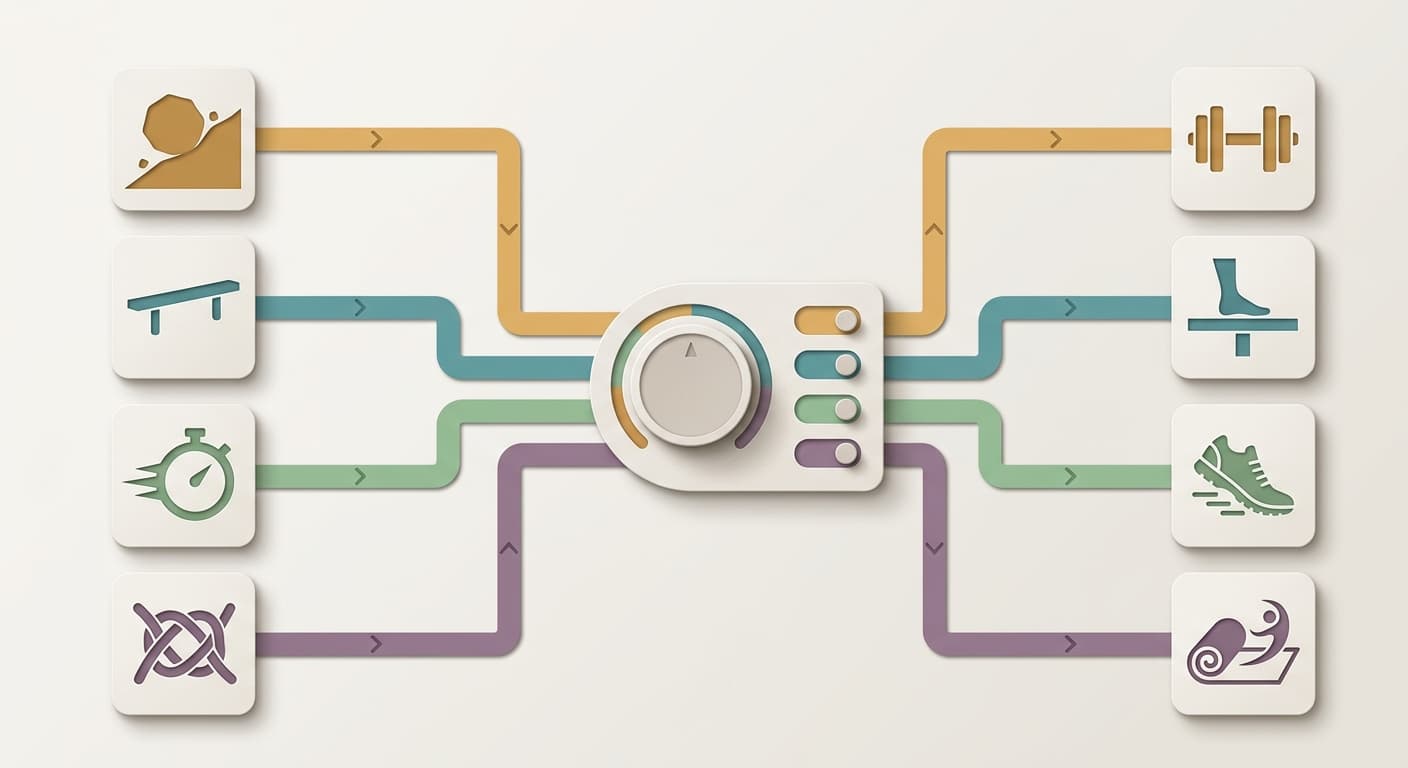
Exercise selection is a matching problem. You match an exercise to a specific adaptation, inside real constraints, for a real body with a current skill level, tolerance, and history. The same move can be perfect for one person and a poor choice for another, not because someone is doing it wrong, but because the move does not fit the present challenge.
A more useful question is this, what should this exercise accomplish, and what is the simplest version I can do well enough, often enough, to create the adaptation I want?
How exercise works
Strength and fitness improve because you expose tissues and the nervous system to repeated demand, then recover, then return slightly more capable. Two systems matter most when picking exercises.
First, the nervous system. Early progress often comes from better coordination, balance, and muscle recruitment. If an exercise is too complex, skill becomes the limiter. You spend sets managing the movement instead of loading the target pattern.
Second, the tissues. Muscles, tendons, and joints adapt when they receive a dose of tension they can recover from. If an exercise irritates a joint or forces constant compensation, pain or breakdown will interrupt your work and kill consistency.
Those two systems explain why nominally similar exercises can feel very different. Two squats can differ greatly in functional difficulty because of stability demands, load placement, range of motion, and technique needed. A machine can let you train the legs hard while asking little of balance. A free-weight squat demands far more whole-system control.
Good exercise selection is often simple scaling, keep the pattern, change the difficulty so the right system is being trained.
The selection filter
Use this short, repeatable filter when you choose exercises. Try candidates in order. The first "no" tells you what to change.
1. What adaptation
Be concrete. "Get stronger" could mean leg strength, pulling strength, or grip. "Build muscle" could mean general size or bringing up a specific region. "Feel better" could mean reducing pain triggers and building tolerance.
A useful split is skill and control, strength, muscle growth, or work capacity. Different adaptations can overlap, but pick one priority for the next four to eight weeks.
2. What limits you
Ask what fails first in your sets. If breathing spikes and back position collapses, the limiter may be conditioning or bracing, not leg strength. If knees ache before your quads feel challenged, tolerance is likely the issue. If the movement is wobbly and unpredictable, stability and coordination are the limiter.
Your best exercise trains the priority while being limited by the thing you want to train, not by unrelated noise.
3. Can you repeat it
Consistency wins. The best program is the one you can actually do. Choose exercises that fit your equipment, schedule, and confidence. If two options train the same pattern similarly, pick the one you will do more reliably.
4. Can you progress it
Progression should be boring. Know how you will make the exercise a little harder week to week without overhauling your plan. Common progression paths include adding load, adding reps, adding a set, improving range of motion, reducing assistance, or increasing control with tempo or pauses.
If you cannot see a clean progression, the exercise is probably too complex or setup is unpredictable.
Choosing by challenge
Below are common training challenges and practical guidance on how to pick moves that actually fit them.
Beginners
The beginner phase is mostly about learning patterns and building a recoverable base. The goal is not to avoid hard work, it is to avoid complexity that prevents hard work.
Prioritize stable exercises that let you feel the target muscles and keep technique consistent. Use a small menu and repeat it often enough to learn it. Keep effort submaximal so form does not collapse every set. Full-body sessions a few times per week are a practical structure because they give frequent practice without overwhelming soreness.
Ask yourself, what is the simplest version of this pattern I can do with control? For a squat pattern, scaling options include using a leg press or hack squat for stability, a goblet squat for a simple free-weight pattern, bodyweight squats to build comfort, or a supported split squat when single-leg balance is the limiter. Machines are not inherently better or worse. They often reduce the stability tax so you can train the target tissue effectively while you learn coordination.
A beginner-friendly rule, if the last two reps of most sets do not look similar to the first two, scale it down. That does not mean quit forever, it means adjust.
Short workouts
When time is limited, selection is about coverage and efficiency. Multijoint exercises often give the most useful stimulus per unit time. A simple 20 to 40 minute template is one lower body compound, one upper body push, one upper body pull, and an optional carry or trunk exercise if you can do it quickly.
If building muscle is the goal and time is short, prioritize the basic compound work first, then add one isolation exercise for a lagging area only if you have the time and energy.
Joint issues
If an exercise reliably triggers pain, it does not matter how theoretically optimal it is. The real program will become avoidance and inconsistency. Adjust variables that change joint stress while keeping the training goal.
Change range of motion, change load placement, increase stability, slow tempo, or change the implement. Often the best exercise is the one that lets you train the muscle hard while the joint stays quiet. For example, if the shoulder dislikes barbell benching, dumbbell or machine pressing may allow heavier work with a more natural path. If the back dislikes pulling from the floor, try Romanian deadlifts, a trap bar, or a machine hinge.
This is not avoiding the problem, it is staying in the game long enough to build capacity.
Plateaus
Plateaus are rarely mysterious. Common causes are a stalled progression path, technique limits, insufficient quality volume, or excessive fatigue.
Match the selection to the cause. If technique is the limiter, reduce complexity and use a more stable variation so you can push intensity. If a weak point is the limiter, add an exercise that biases that region. Within a muscle group, different exercises emphasize different regions, so targeted isolation work can help when a compound under-delivers. If fatigue is the issue, choose lower-fatigue exercises that still provide local stimulus.
Performance training
For athletes, the extra constraint is transfer. The question is not only general strength, but whether the strength transfers to the sport movement. Ask whether you need general capacity or sport-specific expression, and whether you are in a learning phase or a refinement phase.
Beginners in sport often benefit from technique practice and repeated efforts. More qualified athletes may choose movements aligned with force direction, joint angles, and speed requirements. Selection depends on season and the athlete, not just the muscle.
How to pick the next exercise
If you are stuck, follow this simple sequence:
First, pick the pattern you need: squat, hinge, push, pull, carry, or trunk. Second, pick the simplest variation you can do with consistent technique. Third, pick a version you can progress in small steps for four to eight weeks. Fourth, only then add variety, angles, or isolation work.
Self-check, if an exercise makes you feel strong and in control, you will repeat it. If it makes you feel confused, unstable, or punished, you will avoid it. Your program will follow your psychology.
When to get help
Some cases are not a DIY problem. If you have persistent pain, neurological symptoms, or a history of serious injury, the right exercise selection may depend on assessment and graded exposure that requires professional input. Also, some goals demand specificity. If your goal is a particular lift, you cannot avoid practicing it forever. You can scale it, but eventually you must bridge back toward the exact skill.
Final idea
Choosing exercises is not about finding a perfect list. It is about matching an exercise to a clear goal, within real constraints, at your current readiness. Keep this rule, pick the simplest exercise that trains the outcome you want, with a progression you can repeat. That turns "best exercises for..." into something useful, best for this person, in this season, with this body, on this plan.