

The question behind the notebook
You write a few honest lines at the end of a long day.
Maybe it’s a messy brain-dump. Maybe it’s a careful reflection on a hard conversation. Maybe it’s three sentences, because that’s all you can manage.
And then you pause and wonder: is this actually doing anything?
This article answers one question: what research says about journaling and reflection, and what expectations are realistic.
Why journaling research feels confusing
“Journaling” is one label for a lot of different behaviors.
- Sometimes people mean expressive writing (getting emotions onto the page).
- Sometimes they mean gratitude lists.
- Sometimes they mean reflective practice (reviewing choices and learning from them).
- Sometimes they mean tracking symptoms, habits, triggers, or moods.
So when you see a headline like “journaling improves mental health,” it might be describing a very specific kind of writing, done in a very specific context, with a very specific goal.
This article won’t tell you what to write each morning, or promise that journaling will reduce anxiety, heal trauma, or replace professional care. It’s a map of what tends to show up across studies, and why the results don’t look the same for everyone.
What research tends to find (in plain language)
1) Journaling can help, but it’s usually a small help
Across clinical studies (including randomized trials), journaling interventions tend to show small average improvements on mental health symptom measures.
That doesn’t mean it’s useless. It means journaling is often more like:
- a 5 to 15% shift than a 180-degree transformation
- a supporting habit rather than the whole solution
- something that helps some people a lot, and others not much at all
A realistic way to hold it is:
Journaling is not nothing, but it’s rarely a dramatic lever on its own.
If you expected a big mood change after three entries, the research helps explain why that expectation often gets disappointed.
2) Reflection works best when it turns experience into meaning
A lot of journaling research isn’t really about “venting.” It’s about sense-making, turning experience into something you can understand and learn from.
In reflective practice settings (like professional training), journaling is often used to help people notice things they can’t see in the moment, such as:
- where they improvised instead of following a plan
- what they avoided, and why
- what they believed they “should” do versus what they actually did
This points to a different kind of benefit:
Reflection helps you notice the gap between intention and behavior, without turning it into self-attack.
It’s less “I wrote, therefore I’m fixed,” and more “I wrote, therefore I can see what’s happening.”
3) The 'container' matters more than most people think
In research, outcomes often depend on the conditions around the reflection, not just the writing itself.
Studies in education and training settings repeatedly show a similar pattern:
- Reflection goes deeper when people have guidance, safety, and a clear purpose
- Reflection stays shallow when it feels performative, pointless, or pressured
Even if you’re journaling alone, the same idea applies.
If your journaling has:
- no clear intention,
- no structure at all,
- and no emotional safety (meaning you punish yourself on the page),
it can quietly become rumination, self-criticism, or repetition.
But when the container is supportive, gentle prompts, a reasonable time limit, permission to be imperfect, journaling is more likely to become useful.
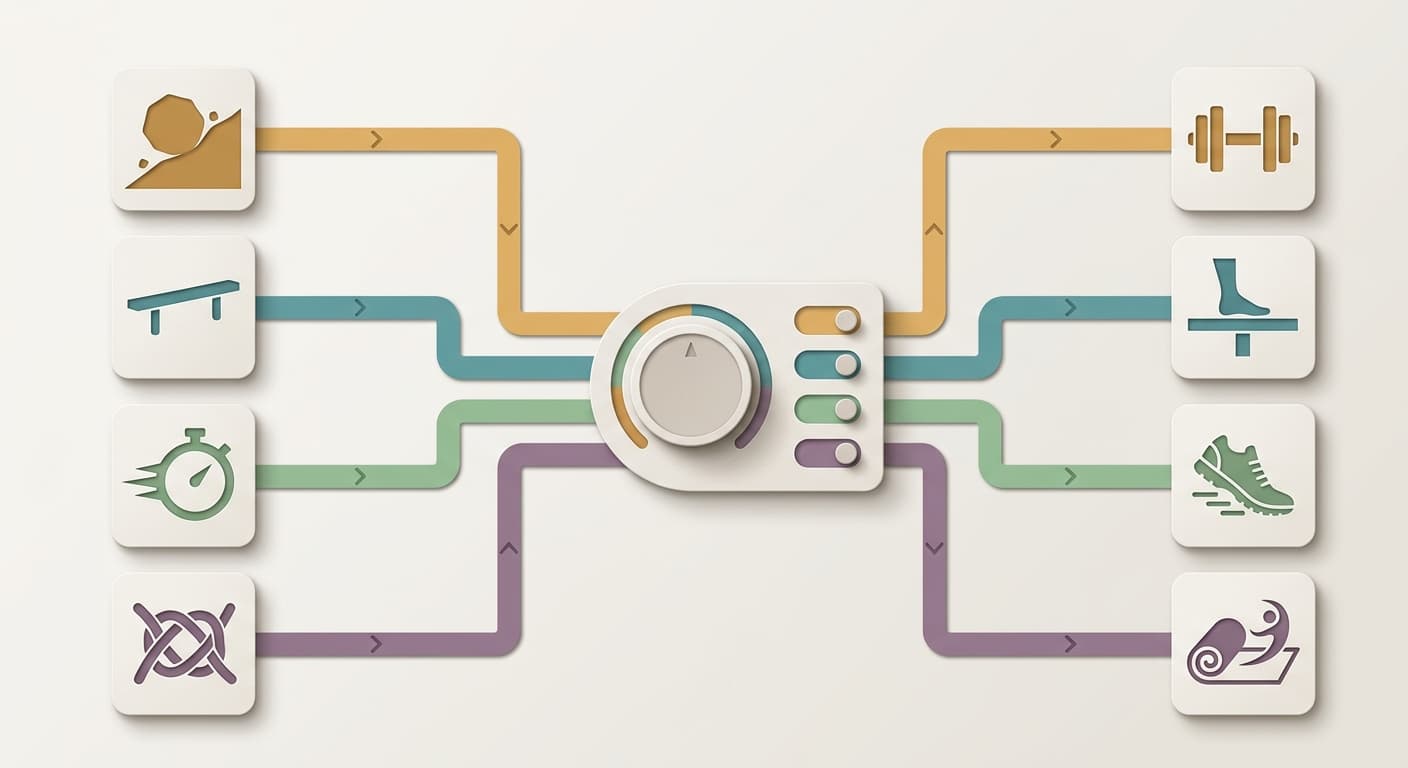
4) A simple model: expression, sense-making, integration
A helpful way to think about “journaling and reflection” is as three overlapping functions. Most entries include all three, but usually one dominates.
- Expression: letting emotion exist on the page without managing it
- Sense-making: understanding what happened and what it meant
- Integration: using that understanding to shape what you do next
This model explains a lot of frustration.
- If you’re mostly expressing but expecting integration, you might feel stuck.
- If you’re forcing integration without expression, you might sound “wise” on the page while feeling unchanged inside.
How this shows up in real life
-
You start journaling during a stressful month and feel worse at first. That can happen when expression brings feelings into focus before they settle. Early intensity isn’t always a sign you’re doing it wrong, it may be the first honest signal.
-
You reflect after tough meetings, hoping for “the right answer.” Instead, you discover competing goals, constraints, and tradeoffs. That can feel unsatisfying because it isn’t a solution, it’s a clearer picture. But clearer pictures often lead to better decisions.
-
You try structured prompts and feel like you’re doing homework. Then you switch to free writing and end up spiraling. The problem may not be discipline. It may be a mismatch of container: too much structure shuts down honesty, too little structure fails to interrupt loops.
-
You keep writing about the same relationship conflict. It feels like stagnation, until you realize it’s a pattern: the same need, boundary, or fear returning in different outfits. Reflection might not fix the relationship. It may clarify what you keep walking past.
-
You write after therapy or coaching and notice your “insights” are the parts you already agree with. The useful material is often the part you resist writing down because it feels too blunt. Reflection can reveal resistance. It doesn’t automatically remove it.
Common misunderstandings (and more realistic takes)
“If I journal, I’ll feel better right away.” Sometimes you do. Often you don’t. Effects tend to be modest on average, and the first phase can feel emotionally louder before it feels clearer.
“Journaling works the same for everyone.” It doesn’t. Results vary by prompt, purpose, frequency, and person. The “average effect” in a study often hides a wide range of experiences.
“Reflection means reliving everything.” Not necessarily. Helpful reflection is often about meaning and choice, not replaying events in high definition.
“If I’m honest, I’ll automatically know what to do next.” Honesty gives you data. Integration still takes time. Many people need either gentle structure (prompts) or an external support system (therapy, coaching, trusted conversations) to turn insight into action.
“If I’m still stuck, journaling must be pointless.” Sometimes journaling is doing a different job than you hoped. It might be revealing the shape of the problem, not solving it.
Limits and boundaries
Research supports journaling and reflection as low-cost, generally low-risk tools that can create small improvements for some outcomes, especially when used as a complement to other supports.
But research cannot promise that journaling will:
- reduce symptoms for everyone,
- resolve trauma,
- replace therapy, medication, community, or rest.
Journaling can also backfire for some people, especially if it becomes rumination, self-criticism, or uncontained processing of intense experiences.
If you’re dealing with severe distress, trauma symptoms, or thoughts of self-harm, it’s safer to involve professional support rather than trying to hold everything alone on the page.
One neutral option some people use alongside paper journaling is a reflection tool like Mendro, a self-reflection app designed to help you notice patterns over time, without prescribing one “correct” way to reflect.
What to take away
The most research-consistent expectation is not transformation. It’s a small shift toward clarity:
- clarity about what you feel
- clarity about what keeps repeating
- clarity about what you’re choosing, and what you’re avoiding
If your journaling practice gives you that, it’s already doing one of the main things reflection is good at doing.